
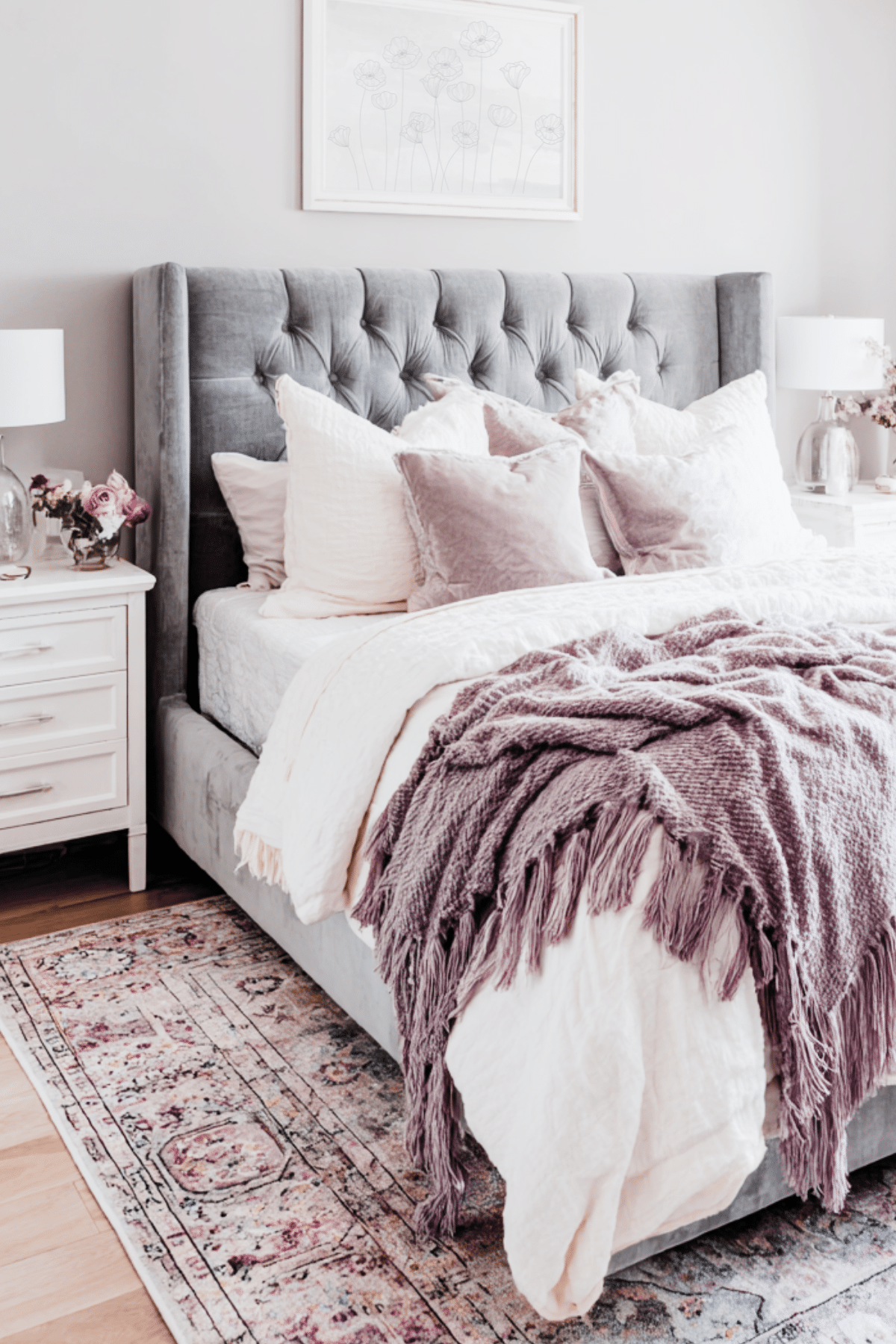
Cozy Zen Bedroom Ideas to Create a Sleep Sanctuary with a Color Palette, Bedding, Pillows, and More
Have you ever noticed you can feel completely sleepy on the couch, but the moment you step into your bedroom, you’re suddenly wide awake? If that sounds familiar, your space might be working against your sleep. It may be time to create a Zen bedroom that truly supports deep, restful nights — keep reading to learn how.
I may earn a small commission for affiliate links in this post at no extra cost to you. Please read my privacy policy and privacy page for more information. As an Amazon Associate, I earn from qualifying purchases.

If you know me, you know I truly love sleep.
It’s not just a hobby — it’s been my career and my passion for decades.
After years as a mattress store manager, I’ve seen firsthand how much your bedroom environment shapes the way you rest, recharge, and start your mornings.
One of the simplest and most powerful upgrades you can make?
Creating a cozy, Zen bedroom.
Imagine walking into your room and instantly feeling your shoulders drop.
The air feels calm.
The lighting is soft and gentle.
Surfaces are clear.
Your bedding feels inviting against your skin.
Nothing is competing for your attention.
Your bedroom feels like one long, steady exhale.
That sense of calm isn’t just nice — it’s biological.
Your environment sends constant signals to your brain.
Bright light tells it to stay alert.
Noise keeps it on guard.
Temperature shifts nudge you awake.
Clutter can quietly remind you of unfinished tasks.
But when your space feels peaceful and intentional, your brain gets the message that it’s safe to power down.
The best part?
You don’t need a full renovation or a big budget to make it happen.
Small, thoughtful changes can completely shift the energy of your room.
To help you get started creating your own sleep sanctuary, I’ll cover how to simplify your bedroom, reduce visual stress, and layer in a few high-impact comfort upgrades that help you fall asleep more easily and wake up feeling refreshed.
So, are you ready to get started?
Great! Grab a snack, settle in, and let’s get into it!
Start with a Calm Foundation: Declutter, Soften, and Simplify

If you want better sleep, start with what your eyes see first.
Visual noise keeps your mind busy, even when you don’t notice it.
The goal is a room that feels easy to maintain, not a perfect showroom.
Plan for one afternoon.
Put on a playlist, open a window for five minutes, and grab a laundry basket and a trash bag.
First, clear anything that doesn’t belong in a bedroom: dishes, mail, packaging, and random cords.
Next, gather all laundry (dirty and clean) and move it out.
If you can’t finish it today, at least contain it in one hamper with a lid.
After that, reset surfaces.
Aim for “mostly clear” instead of “totally empty.”
A bedroom can still feel cozy with a lamp, a book, and one small personal item.
It starts to feel restless when every surface becomes storage.
Finally, soften the hard edges.
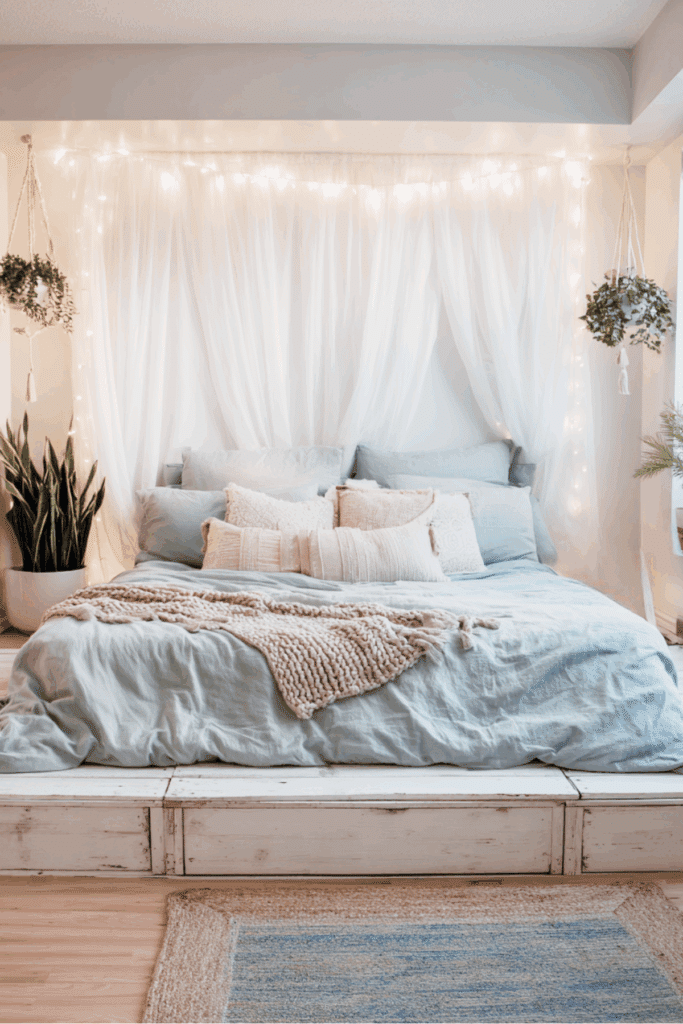
Add one simple texture if the room feels stark, like a small rug beside the bed or a knit throw at the foot.
Texture reads as comfort to your body, almost like the room is saying, “You’re safe here.”
If you only do one thing today, make the area around your bed visually quiet. Your brain notices that more than you think.
Clear the Sleep Zone First

Your “sleep zone” is the bed, both nightstands, and the floor space around them.
This is the stage your brain looks at right before you close your eyes.
When it’s clear, your nervous system gets a simpler message: this space is for rest.
Use this quick checklist and keep it practical:
- Clear surfaces: Limit each nightstand to a lamp, a coaster or water, and one book (max).
- Remove piles: Take laundry, work bags, and “I’ll deal with it later” stacks out of sight.
- Hide cords: Route chargers behind the nightstand, or use a small cord clip.
- Keep decor calm: One piece of art is enough near the bed, skip busy clusters.
- Open pathways: Make sure you can walk to the bed without stepping over anything.
Try one simple rule: nothing on the floor by bedtime.
It sounds strict, but it’s freeing.
Then add a 10-minute nightly reset.
Set a timer, return items to their homes, smooth your bedding, and dim the lights.
That tiny ritual works like a closing bell for your day.
Choose a Soft, Earthy Color Palette that Feels Cozy

Color can either soothe you or keep your brain “on.”
For a cozy, Zen bedroom, stick with gentle, earthy tones that look good in low light.
Here are a few that tend to feel calm at night:
Warm white, oatmeal, greige, muted sage, dusty blue, soft clay, light lilac, and charcoal accents.
You don’t have to repaint to use them.
Bring these shades in through bedding, a throw blanket, curtains, a simple framed print, or even a lampshade.
If your room already has bold colors, keep the area closest to the bed quieter.
High contrast and busy patterns right by your pillow can feel like visual caffeine.
If you need more help choosing combinations, see my post on cozy bedroom color palette ideas for better sleep.
Where Feng Shui Fits In

You might be wondering where Feng Shui comes into play when creating a zen bedroom.
Simple ideas like placing your bed where you can see the door without being directly in line with it, keeping pathways clear, balancing both sides of the bed, and removing clutter under the bed all support a sense of calm and security.
At its core, Feng Shui is about creating a space that feels stable and balanced — and that aligns beautifully with better sleep.
Create a Zen Bedroom Corner for Relaxation
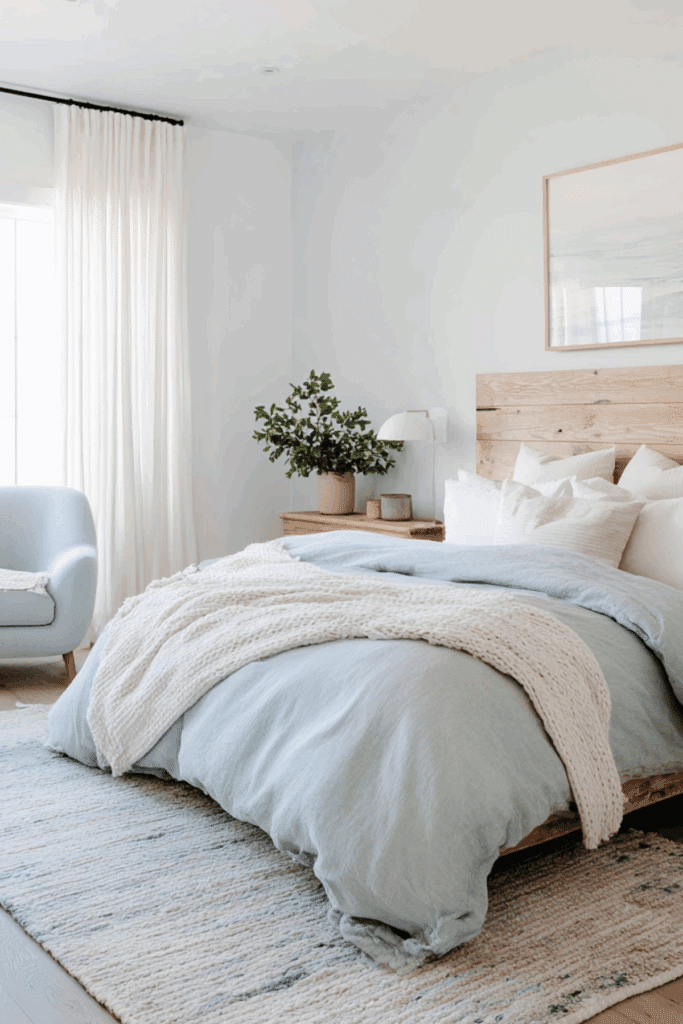
If you have even a small amount of extra space, consider creating a simple zen corner dedicated to relaxation.
This doesn’t need to be elaborate — a comfortable chair or floor cushion, a soft throw, gentle lighting, and perhaps a small plant or calming candle can be enough.
The goal is to create a quiet spot where you can read, journal, stretch, or simply unwind before getting into bed.
By separating your wind-down space from your sleep space, you help your brain associate the bed strictly with rest.
That small, intentional corner adds another layer of calm to your bedroom and reinforces the peaceful, sleep-friendly atmosphere you’re building.
Make the Bed the Coziest, Most Sleep-Friendly Spot in the Room

If your bed isn’t comfortable, the rest of the room can’t fully make up for it.
Your body needs support from the mattress, steady temperature, and fabrics that don’t irritate your skin.
Here are a few ways to make your bed more Zen and ready for sleep.
Finding the Perfect Mattress for a Truly Zen Bedroom

If you want your bedroom to feel calm and restorative, your mattress has to be part of that equation.
A zen space isn’t just about soft lighting and uncluttered nightstands — it’s about how your body feels the moment you lie down.
The right mattress should support your spine, ease pressure points, and help your muscles fully relax.
When your body feels supported, your nervous system can settle, too.
That’s when your bed stops feeling like just another piece of furniture and starts feeling like a retreat.
For more help on choosing a great sleep set, check out the ultimate mattress buying guide.
Layer Bedding for Comfort Without Overheating
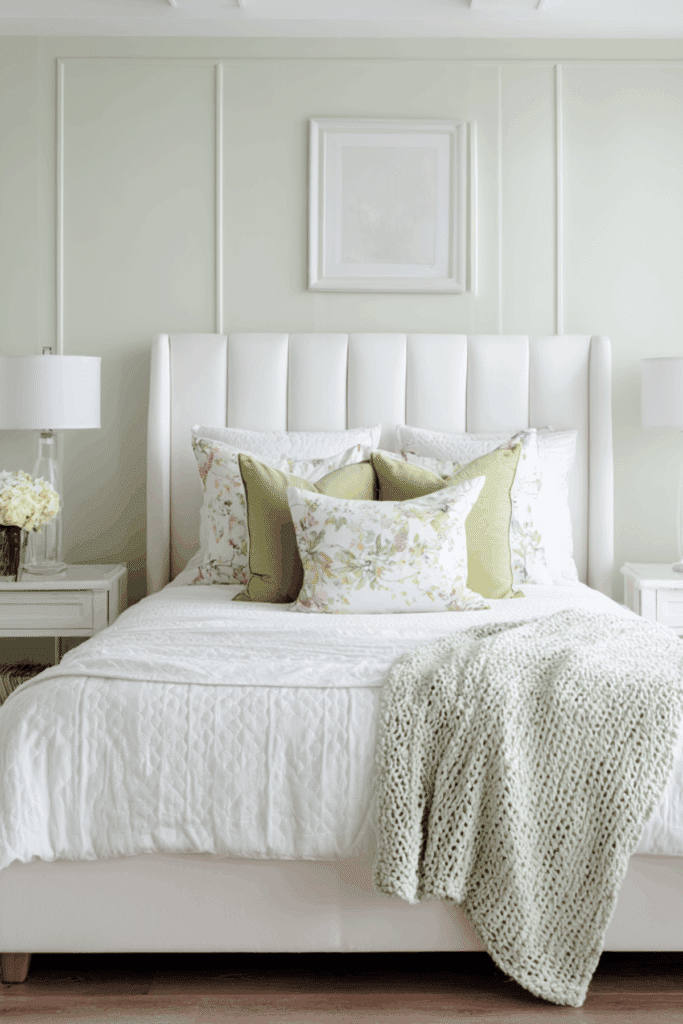
A zen bedroom should feel balanced — not too hot, not too cold, not too heavy.
That’s where smart layering makes all the difference.
Instead of piling everything on at once, think in light, breathable layers you can adjust as your body temperature shifts through the night.
Start with breathable sheets that feel good against your skin.
Add a lightweight blanket or quilt for gentle warmth, and finish with a duvet that matches your sleep temperature.
This gives you flexibility without bulk, so you’re never stuck kicking everything off at 2 a.m.
When your bedding works with your body instead of trapping heat, your sleep feels more effortless.
The goal isn’t just coziness — it’s comfort that stays consistent all night long.
When choosing sheets, look for breathable fabrics like cotton percale, linen, or bamboo that allow air to circulate instead of trapping heat.
Lightweight, cooling sheets can make a noticeable difference in helping you stay calm and comfortable throughout the night.
Pick Pillows That Support Your Neck, Not Just Your Style

In a zen bedroom, every detail matters — even your pillow.
The right pillow helps your neck and head stay supported so your body can fully relax, instead of waking up stiff or tense.
Side sleepers usually need a slightly higher pillow to keep their neck aligned, back sleepers benefit from a medium-height pillow, and stomach sleepers often do best with a low pillow or none at all.
Choosing the right fill can also make a difference: memory foam feels supportive, latex stays cooler, and soft down-alternatives are cozy and easy to fluff.
The goal is simple: when you lie down, your neck should feel neutral and relaxed, not angled or strained.
Learning how to choose the best bed pillow not only helps you sleep better but also keeps your bed looking calm, inviting, and ready for rest.
Use Light, Sound, Scent, and Texture to Create a True Zen Bedroom Vibe

Once the basics are handled, sensory cues do the heavy lifting.
Your body falls asleep faster when the room tells it, over and over, that it’s safe to relax.
That’s what a zen bedroom vibe really is, steady signals that nothing urgent is happening here.
You don’t need a lot of stuff.
You need the right kind of input, softer light, less noise, gentle scent (or none), and textures that feel comforting.
This is also where renters and small-space sleepers can win, because most of these changes don’t require paint or permanent installs.
Set Up Gentle Lighting That Tells Your Body It Is Time to Sleep
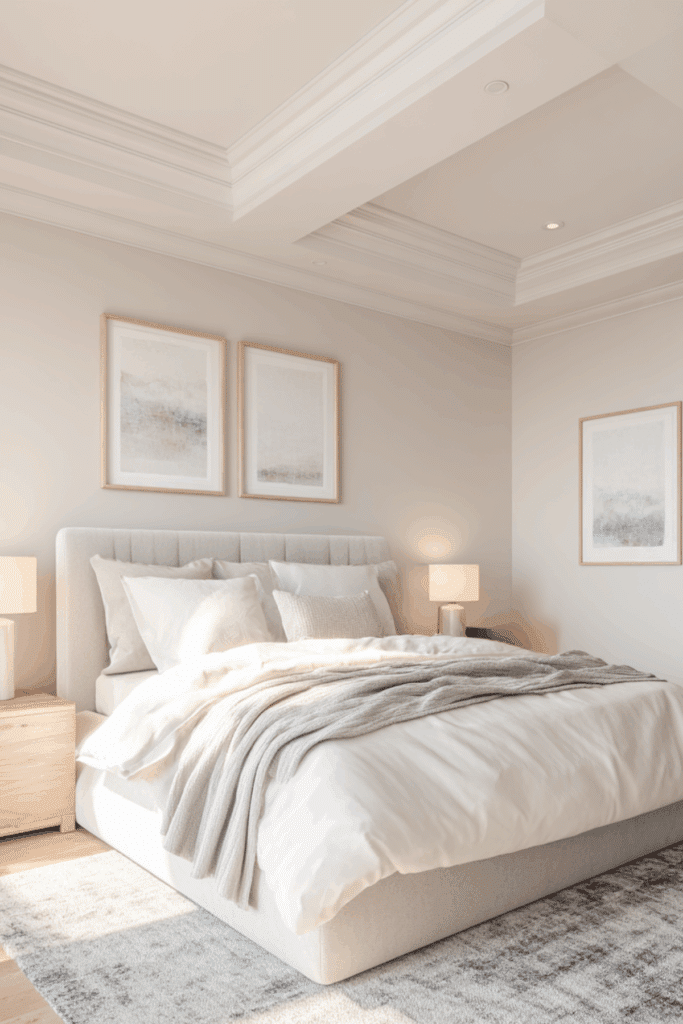
Light controls your sleep timing more than most decor choices.
If your room is bright at night, your brain stays in “day mode.”
If it’s soft and warm, your body starts winding down.
Think in three layers. Overhead light is for cleaning and getting dressed, so use it less at night.
Bedside task lighting should be warm and focused, good for reading without blasting the whole room.
Ambient glow is the secret sauce, a soft lamp, a dim bulb, or a small light tucked on a dresser.
Choose warm bulbs labeled soft white.
If you can, add a dimmer or a smart bulb so you can lower the brightness as the night goes on.
Also, watch glare.
A shade that hides the bulb makes a big difference.
Try a simple 60-minute wind-down plan.
At 60 minutes, turn off overheads and switch to warm lamps.
At 30 minutes, dim again and keep the light low and steady.
At 10 minutes, make the room as calm as you can, then get into bed.
Screens fight this process, so make it easier on yourself.
Reduce brightness, use night mode, and charge your phone away from the bed if you can.
Quiet the Room with Simple Sound Control and Calming Scents
Noise doesn’t have to wake you fully to disrupt sleep.
It can nudge you into lighter stages, then leave you tired in the morning.
Start by blocking the easiest gaps.
A door draft stopper can reduce hallway sound.
A rug helps if you have hard floors.
Curtains soften outside noise, even if they aren’t fancy.
If your walls feel bare and echo-y, a soft wall hanging or a big fabric headboard can take the edge off.
You can also place a bookcase against a shared wall to add a buffer.
If you can’t control your environment, add a steady sound you choose.
White noise, a fan, or a simple sound machine can smooth out random bumps and voices.
Scent can also cue relaxation, but keep it gentle.
Lavender, chamomile, and cedar are popular because they read as calming to many people.
Still, unscented is the best choice if you’re sensitive or prone to headaches.
Be careful with safety, too.
Skip open flames when you’re sleepy.
If you use a diffuser, keep it clean and don’t overdo the oil amount.
Strong fragrance can backfire and feel like sensory clutter.
To make it feel intentional, set up a tiny “zen corner” on your nightstand or dresser.
A small tray with hand lotion, one book, and a sleep mask can replace random clutter with a quiet routine.

Final Thoughts
Creating a zen bedroom isn’t about perfection.
It’s about intention.
You don’t need a minimalist magazine spread or an expensive makeover to sleep well.
What you need is a space that feels calm to you.
A room that signals safety, comfort, and “it’s okay to turn off now.”
Over the years, I’ve seen how even the smallest changes — softer lighting, cleaner surfaces, better bedding, a cooler temperature — can completely shift the way someone sleeps.
Your bedroom should support you at the end of a long day, not compete for your attention.
Think of your room as part of your night routine.
When your environment is aligned with rest, falling asleep becomes easier and staying asleep feels more natural.
Small shifts. Big difference.
Need more help with your evening? Grab a free printable night routine checklist below, and we’ll send it straight to your inbox.
Your Turn
Now it’s your turn! I’d love to know — what’s the first Zen bedroom change you’re going to make? Do you have any other tips to share? Let me know in the comments!
RELATED POSTS:
- Zen Corner Ideas for the Bedroom to Relax and Sleep Better
- Cozy Earthy Bedroom for a Warm Aesthetic to Unwind at Night On a Budget
- Blue Bedroom: Easy Ideas That Make Your Space Feel Calm, Warm, and Relaxing
- Cozy Coastal Bedroom Ideas: Neutral, Modern, and Chic for a Relaxing Space
- Peaceful Bedroom Ideas to Create a Tranquil Space for Better Sleep
- Boho Bedroom Ideas: Easy Ways to Create a Warm, Earthy & Cozy Sleep Sanctuary
- How to Create a Comfy Bed for Better Sleep Tonight
- Cozy Small Guest Bedroom Ideas That Turn a Tiny Room Into a Restful Sleep Retreat
- Cozy Minimalist Bedroom: Easy Ideas for a Calming Retreat and Better Sleep
- Relaxing Bedroom Ideas for Better Sleep (Even in a Small Room)
- Cozy Bedroom Color Palette Ideas for Better Sleep
- Cozy Bedroom Ideas for Better Sleep: Easy Tips to Create a Sleep Sanctuary
- Top 15 Bedroom Essentials: My Must Have List for Better Sleep
- The Best Sleep Investment I’ve Ever Made (and Why It’s the BedJet Sleep System)
- How to Build a Sleep Routine That Actually Works
- Sleep Hygiene Tips That Work [Free Printable Checklist Included]
- How To Choose The Right Size Of Mattress Buying Guide
- How to Choose the Best Bed Pillow For Sleeping (Tips From an Expert)


Hi, I’m Debbie, general manager of a mattress store chain with 25+ years helping people improve their sleep quality. At Sweet Sleep Tips, I share natural, practical sleep solutions, calming bedtime habits, and printable tools to help you fall asleep faster and wake up refreshed. My goal is to make better sleep simple, healthy, and stress-free.
Follow me on Pinterest, Instagram, and Facebook to stay up to date with all the latest Sweet Sleep Tips.






I love a good rug at my bedside. The texture feels so soft and comforting beneath my feet. Now I know it actually plays a part in my sleep. Thanks for sharing Debbie!
I love your tip of clearing your zen zone of any clutter. There is nothing worse than trying to fall asleep when all your “stuff” is staring back at you.