

How to Create a Comfy Bed for Better Sleep Tonight
Are you searching for easy ways to create a comfy bed for better sleep tonight? If so, keep reading! I’ve got you covered with tons of tips to make your bedroom a cozy, sleep sanctuary.

As someone who has worked in a mattress store for more than 25 years, I know how important a comfy bed is for sleep.
You can do everything “right” at bedtime and still wake up worn out if your bed doesn’t feel supportive, cool, and inviting.
That’s often the missing piece.
The good news is that a cozy bed isn’t about buying the most expensive mattress, sheets, or pillows.
It’s about matching your mattress, pillow height, bedding, and bedroom setup to your body and the way you actually sleep.
When those pieces work together, your bed feels better the moment you climb in.
Maybe your mattress feels too firm, your pillow pushes your neck out of line, or your bedding traps too much heat.
Even small problems like that can leave you tired after a full night in bed.
That’s also why your overall room setup and mattress matter more than most people think.
To help you create the perfect bedroom setup for sleep, I’ll cover how to build a comfort layer by layer, starting with support and moving through pillows, sheets, blankets, and the feel of your room.
By the end, you’ll know how to make your bed feel cozy, balanced, and much more sleep-friendly, without wasting money on things you don’t need.
So, are you ready to get started? Great! Let’s get into it!
I may earn a small commission for affiliate links in this post at no extra cost to you. Please read my privacy policy and privacy page for more information. As an Amazon Associate, I earn from qualifying purchases.
Start with the Mattress, Because Every Comfy Bed Needs the Right Base

If you want a truly comfy bed, start here.
Your mattress does most of the heavy lifting for comfort, support, and sleep quality, so if the base feels wrong, every other layer has to work harder.
That doesn’t mean you need the most expensive option.
It means you need to buy a mattress that fits your body, your sleep position, and the way you want the bed to feel when you lie down at the end of the day.
Match Mattress Firmness to the Way You Sleep

The right mattress firmness should help you feel settled, supported, and able to relax without strain.
If a mattress feels too hard, you may notice pressure building at your shoulders or hips.
If it feels too soft, your body can sink too far and leave your spine out of line.
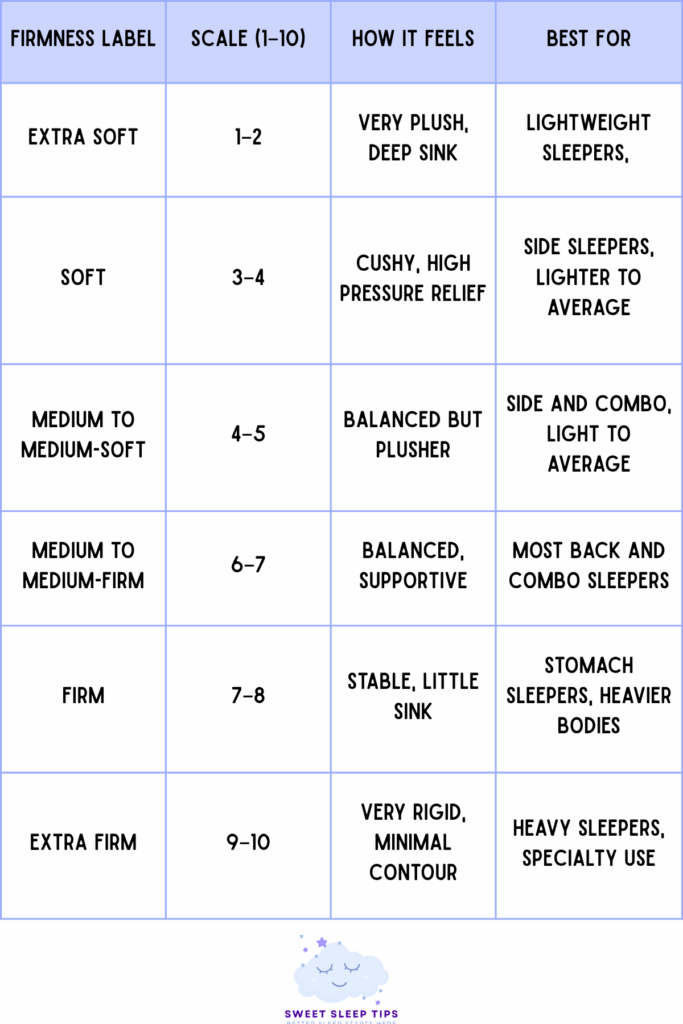
For most sleepers, a simple guide works well:
- Side sleepers usually feel best on a softer to medium feel, because the mattress should cushion your shoulders and hips.
- Back sleepers often need a medium to medium-firm feel, so the lower back stays supported without feeling stiff.
- Stomach sleepers usually need a firmer feel, because too much sink can pull the lower back into an awkward bend.
- Combo sleepers do best with a balanced feel, usually medium or medium-firm, so it stays comfortable as you move.
Body weight matters too.
If you have a lighter build, a firmer mattress may feel harder than expected.
If you carry more weight, a soft bed may feel less supportive, faster.
When you lie down, you should feel supported, not pushed up or swallowed whole.
Look for Pressure Relief, Support, and Motion Control

A comfy bed should ease pressure and hold your body up where it counts.
That means your shoulders and hips shouldn’t feel jammed, and your lower back shouldn’t feel like it’s floating or collapsing.
If you sleep alone, those basics still matter most.
If you share a bed, motion control matters a lot more.
A mattress with good motion isolation helps absorb movement, so you don’t feel every turn, kick, or late-night bathroom trip from the other side.

Pay close attention to three comfort signs:
- Pressure relief helps sore shoulders and hips feel less pinned down.
- Lower back support keeps your midsection from dipping too far.
- Motion control helps the bed stay calm when someone moves.
Know When Your Old Mattress is Making Sleep Worse

Sometimes the problem isn’t your sheets or pillow.
It’s the mattress underneath everything.
There are several ways to know when to replace your mattress.
If your bed sags, sleeps hot, squeaks, or leaves you achy in the morning, it’s probably working against you.
The same goes if you sleep better in a hotel or guest bedroom than you do at home.
Use this quick checklist before you replace it:
- You see sagging, dips, or lumps
- You wake up with aches or stiffness
- You feel springs, noise, or uneven spots
- You sleep too hot, even with lighter bedding
- You rest better in other beds
If several of those sound familiar, your mattress may be the reason your comfy bed still doesn’t feel comfortable.
Choose Bedding That Makes Your Bed Feel Soft, Cool, and Easy to Relax In

Once your mattress feels reasonably supportive, bedding can change the feel of your comfy bed fast.
This is where texture, airflow, and layering do a lot of heavy lifting.
You do not need to buy everything at once, either.
Start with the pieces you notice most, then build from there.
Pick Sheets that Feel Good on Your Skin

Your sheets are the first thing your body feels, so they matter more than people think.
If the fabric feels scratchy, sticky, or too warm, your bed never quite settles into that calm, cozy feeling.
When you’re choosing new sheets, the material really does make a difference in how your bed feels at the end of the day.

Cotton is one of those timeless options that always feels familiar and comfortable, whether it’s soft and cozy or crisp and smooth, depending on the weave.

Microfiber is a great choice if you want something soft and budget-friendly without overthinking it. It feels smooth right away and is super easy to care for since it dries fast and doesn’t need much special treatment.

Linen has that light, airy feel that makes your bed feel fresh and relaxed the second you climb in. It’s incredibly breathable and perfect if you love a slightly textured look that still feels cozy at night.

Bamboo blends feel completely different in the best way because they’re silky, cool, and extra smooth against your skin.
They’re favorite bed sheets for hot sleepers since they’re lightweight and breathable, but it’s always smart to check the care label because bamboo sheets often do best on gentle cycles.
Use Layers So You Can Stay Warm Without Getting Too Hot
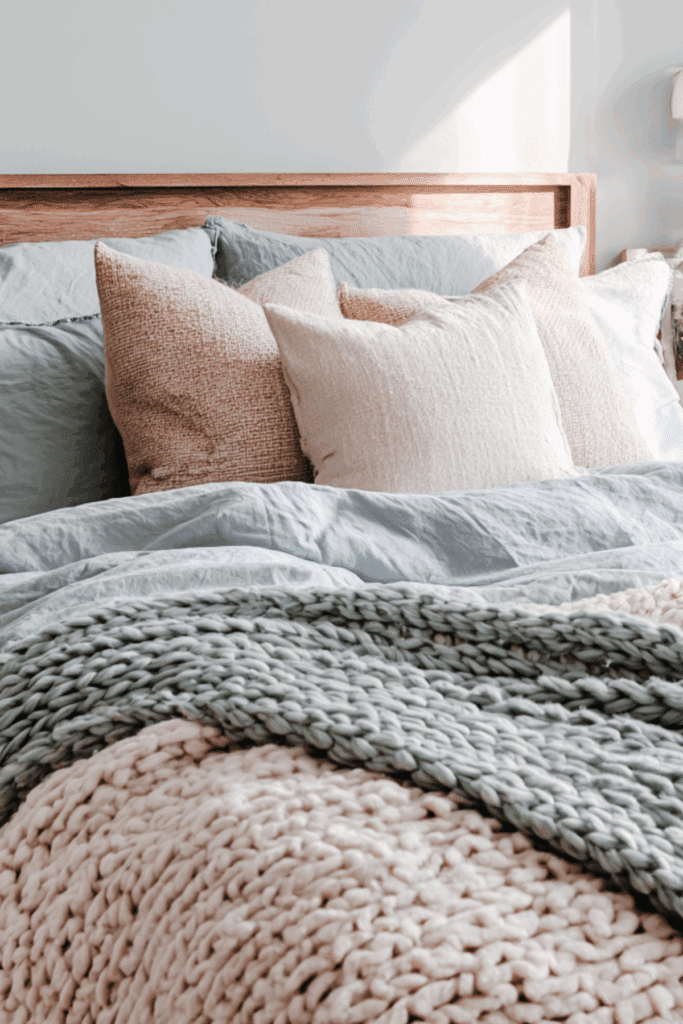
A bed feels better when you can adjust it without starting over.
That is why layering works so well.
Instead of one heavy top layer, use two or three lighter ones that you can pull on or toss aside as needed.
A simple setup often works best:
- Light blanket for everyday comfort and easy temperature control
- Quilt for a bit of weight without too much heat
- Duvet or comforter for colder nights or cooler bedrooms
Layered bedding also helps if you share a bed.
One person may want cozy warmth, while the other sleeps hot.
Because of that, lighter layers usually work better than one thick comforter year-round.
They also make seasonal changes easier, which saves money and hassle.
Add a Mattress Topper if Your Bed Needs a Comfort Boost

If your bed feels a little too firm or flat, a mattress topper can be a smart short-term fix.
It adds softness and pressure relief, especially around the shoulders and hips, without replacing the whole bed.

Memory foam feels cushioned and close-contouring.
Latex feels springier and less sinky.
Fiberfill toppers feel plush at first, but they usually flatten faster.
If your mattress is still supportive and just needs a softer surface, a topper can make your comfy bed feel much better quickly.
A topper can improve comfort, but it cannot fix sagging, broken support, or a worn-out mattress.

So, when is it worth buying one?
If your bed is in decent shape and only needs a comfort boost, yes.
If the mattress has dips or leaves you sore every morning, save that money for a replacement instead.
Set Up Your Pillows So Your Neck, Shoulders, and Back Can Fully Relax
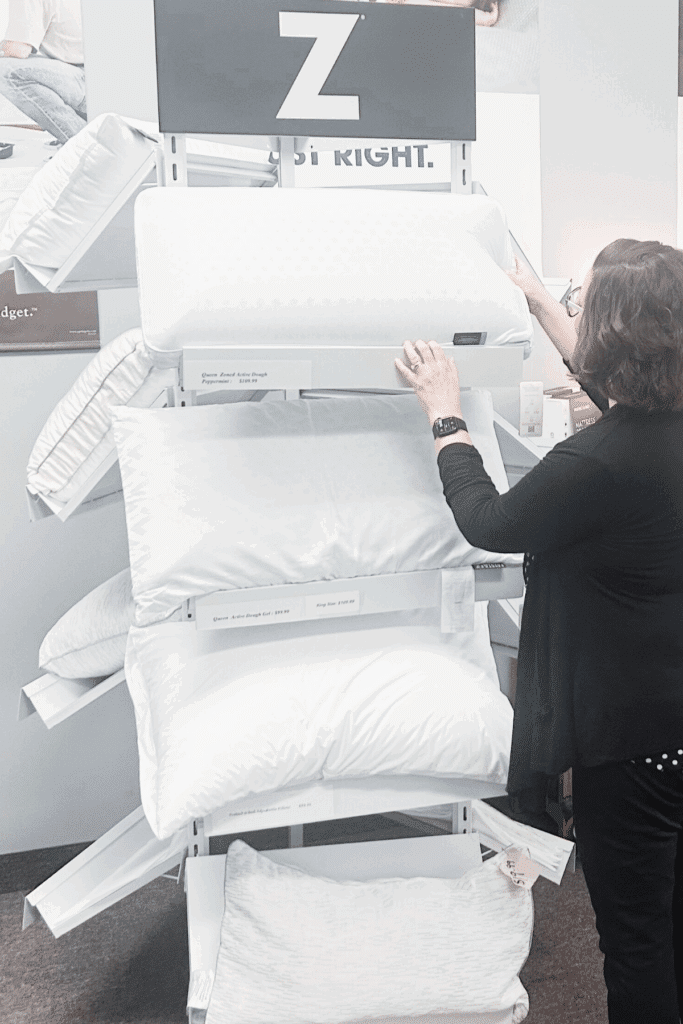
A lot of people focus on the mattress and stop there.
But learning how to choose the best bed pillow is important every single night.
If it props your head too high, or lets it drop too low, your neck has to work when it should be resting.
That is why the right bed pillow matters so much in a comfy bed.
Think of your pillow as the bridge between your head and mattress.
When that bridge is the right height and feel, your neck, shoulders, and back can finally let go.
Choose Pillow Height Based on Your Sleep Position

Pillow loft just means height.
A low-loft pillow is thin, a medium-loft pillow has a moderate rise, and a high-loft pillow looks fuller and taller.
What usually works best depends on how you sleep:
- Side sleepers often do best with high loft, because the pillow needs to fill the space between your head and shoulder.
- Back sleepers usually need medium loft, so the head stays supported without getting pushed forward.
- Stomach sleepers tend to need low loft, or sometimes almost no pillow, because too much height can twist the neck.

The goal is simple: keep your head and neck aligned with the rest of your spine.
If your chin tips up, or your ear gets pushed toward your shoulder, the pillow is probably not the right height.
A good pillow should feel almost invisible, because your body is not fighting it.
Try Different Pillow Fills for Comfort and Support

Once the height is right, fill changes the feel.
This is where comfort gets personal.

Memory foam feels supportive and shaped. It can hold your head in place well, so it often suits people who want a steadier feel.

Down alternative feels soft, light, and easy to fluff. If you like a cozy pillow that is simple and budget-friendly, this can be a nice fit.

Latex feels springy and supportive, with less sink than memory foam. It often works well if you want your pillow to feel buoyant instead of squishy.
The best pillow fill is the one that feels good to you and still keeps your neck in a neutral spot.
Do Not Forget the Small Extras That Make a Big Difference

Sometimes one standard pillow is not enough, especially if you deal with pressure, pregnancy, or position-related aches.

A body pillow can help side sleepers feel more supported from chest to knees.

A knee pillow can be a small fix with a big payoff. If you sleep on your side, placing one between your knees can help your hips and lower back feel more at ease.

A lumbar pillow can take some strain off your lower back and help your whole body settle.
These extras are not fancy add-ons.
They are simple tools that can make your bed feel more supportive, calmer, and much more relaxing.
Make Your Bedroom Feel Calm, Clean, and Ready for Sleep

A comfy bed feels even better when the room around it helps you unwind.
You can have soft sheets and a great pillow, but if the space feels messy, bright, or stuffy, your body never fully settles.
So, you can create a calming, cozy minimalist bedroom or a Zen bedroom to reshape how restful the whole experience in your space feels.
Keep Your Bed Fresh, Clean, and Inviting
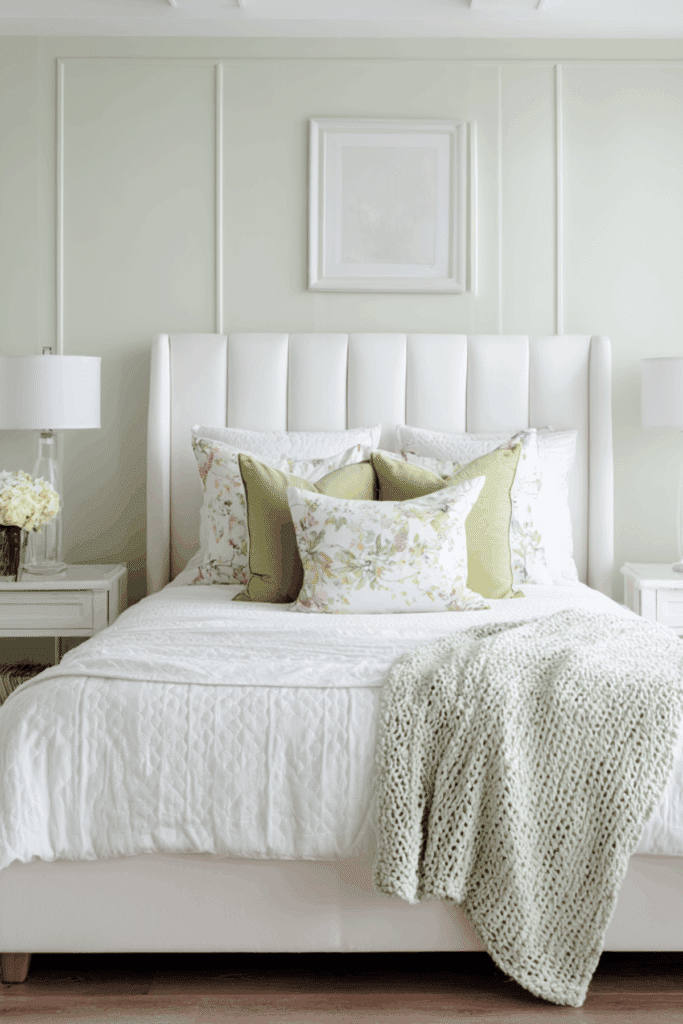
A clean bed does more than look nice.
It feels better against your skin, smells fresher, and makes it easier to relax at night.
When your sheets are overdue for a wash, or your pillows feel flat, your bed loses that cozy, sink-right-in feeling.
A few simple habits make a big difference:
- Wash your sheets often, so they stay soft, fresh, and pleasant to crawl into.
- Fluff your pillows daily to bring back shape and support.
- Rotate your mattress (I recommended to my customers twice in the first month and every 1-3 months after that) so wear stays more even over time.
- Keep clutter off the bed so it stays a place for rest, not storage.
Even smell matters here.
Clean bedding has a quiet, calming effect, while stale fabric can make the whole room feel tired.
In other words, freshness helps your mind let go faster and create a more relaxing bedroom.
Control Temperature, Light, and Noise for Deeper Rest

Even the most comfortable mattress can feel wrong in a room that’s too hot, too bright, or too noisy.
If you wake up sweaty, squinting at outside light, or hearing every sound in the house, your bed won’t feel nearly as restful or comfy as it should.
Start with the basics.
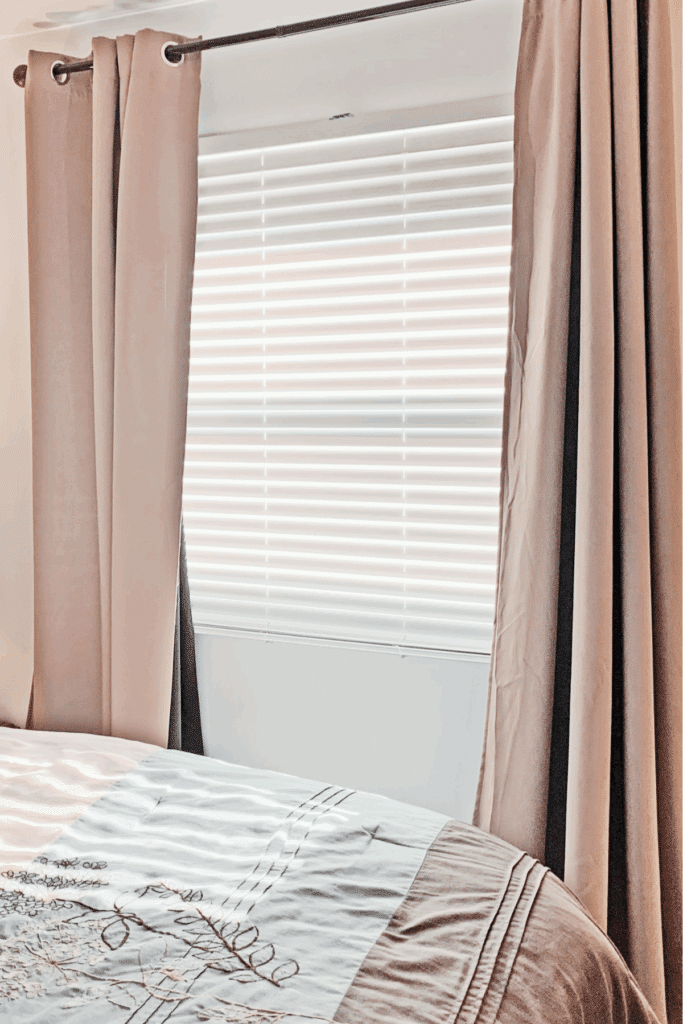
Use breathable bedding if you sleep warm, add blackout curtains if early light wakes you, and run a bedside fan if your room feels stuffy.
For noise, a white noise machine can smooth out sharp sounds that pull you awake.
If your mind stays busy once the room gets quiet, a short pre-sleep habit like these brain dump prompts for better sleep can help clear mental noise, too.
Use Simple Styling Touches That Make You Want to Get Into Bed

Looks affect comfort more than most people expect.
When your bed looks neat and soft, your brain reads it as safe, calm, and ready for rest.
That matters.
Keep the styling simple.
Smooth layers, a folded throw blanket, and a few soft colors can make the bed feel more inviting without turning it into a design project.
Try to limit visual clutter, too, because a crowded room can make your mind feel crowded.
A calm room doesn’t need to be fancy.
It just needs to feel easy on your eyes and easy on your nerves.
When your bedroom feels peaceful, your comfy bed becomes a place you truly want to return to every night.
Build a Comfy Bed That Fits Your Body, Budget, and Daily Habits

A comfy bed works best when it matches real life, not a showroom test.
You sleep in your body, with your habits, your aches, and your budget, so your choices should reflect that.
That also means you don’t need to replace everything at once.
Start with what affects your sleep the most, then give each change enough time to prove itself.
Upgrade The Items That Will Improve Your Sleep the Most

If money is tight, think in layers of impact.
The mattress usually comes first, because it’s the base that supports your whole body.
If your bed sags, causes pain, or feels uneven, new sheets won’t solve the real problem.

After that, move to pillows, especially if you wake with neck pain, shoulder tension, or headaches.
A better pillow is often one of the cheapest upgrades with the biggest payoff.

Then look at sheets, blankets, and layers.
These matter most when your main issue is heat, scratchy fabric, or feeling too heavy under the covers.
In other words, buy for the problem you feel every night.
A simple order of priority looks like this:
- Mattress if support is the problem
- Pillow if your neck or shoulders hurt
- Sheets and layers if comfort and temperature are the issue
Test Comfort Over Time Instead of Judging it in Five Minutes

A bed can feel great for five minutes and still sleep badly all week.
Real comfort shows up after several nights, when your body has time to react.
Pay attention to a few clear signs.
- Do you wake up sore, too warm, or annoyed by movement
- Do you fall asleep faster, or keep shifting to get comfortable?
A good bed doesn’t just feel soft. It helps you sleep with less effort.
If you make one change at a time, it’s easier to tell what actually helped.
That’s how you make smarter choices, not more expensive ones.
Create a Simple Bedtime Reset That Makes Your Bed Feel Even More Inviting

Even a well-made bed feels better when you prepare it for sleep.
A quick reset can turn your room from “still awake” into “ready to rest.”
Smooth the sheets, dim the lights, cool the room a bit, and put your phone away.
These small steps change the feel of the space fast.
Your bed stops feeling like a place to scroll or snack, and starts feeling like a place to truly sleep.
If you want a simple plan to follow each night, try this night routine list for better sleep.
The goal is simple: make smart upgrades, keep your routine easy, and test what helps before buying the next thing.

Final Thoughts
Creating a comfy bed really is one of the easiest ways to completely transform how you sleep each night.
When your bed feels soft, inviting, and perfectly layered, it naturally helps your body relax the moment you climb in.
I truly think a cozy bed makes a big difference, not only in falling asleep faster, but also in how deeply you rest and how refreshed you feel when you wake up the next morning.
Something as simple as the right sheets, a supportive pillow, and a comforter that feels just right can turn your bedroom into the most relaxing space in your home.
When your bed feels comfortable and peaceful, it becomes more than just a place to sleep — it becomes a place where you can unwind, recharge, and start each new day feeling calm and well-rested.
Need more ways to relax at night? Grab a free printable night routine list below, and we’ll send it straight to your inbox.
Your Turn
Now it’s your turn to create a comfy bed that feels perfectly cozy to you. Do you have any additional tips to share? Let me know in the comments.


RELATED POSTS:
- Cozy Small Guest Bedroom Ideas That Turn a Tiny Room Into a Restful Sleep Retreat
- Cozy Coastal Bedroom Ideas: Neutral, Modern, and Chic for a Relaxing Space
- Cozy Minimalist Bedroom: Easy Ideas for a Calming Retreat and Better Sleep
- Zen Corner Ideas for the Bedroom to Relax and Sleep Better
- Cozy Zen Bedroom Ideas to Create a Sleep Sanctuary with a Color Palette, Bedding, Pillows, and More
- Relaxing Bedroom Ideas for Better Sleep (Even in a Small Room)
- Cozy Bedroom Color Palette Ideas for Better Sleep
- Cozy Bedroom Ideas for Better Sleep: Easy Tips to Create a Sleep Sanctuary
- Top 15 Bedroom Essentials: My Must Have List for Better Sleep
- The Best Sleep Investment I’ve Ever Made (and Why It’s the BedJet Sleep System)
- How to Build a Sleep Routine That Actually Works
- Sleep Hygiene Tips That Work [Free Printable Checklist Included]
- How To Choose The Right Size Of Mattress Buying Guide
- How to Choose the Best Bed Pillow For Sleeping (Tips From an Expert)
- Cozy Earthy Bedroom for a Warm Aesthetic to Unwind at Night On a Budget
- Fall Sleep Essentials to Make Your Bedroom Extra Cozy This Autumn Season
Hi, I’m Debbie, general manager of a mattress store chain with 25+ years helping people improve their sleep quality. At Sweet Sleep Tips, I share natural, practical sleep solutions, calming bedtime habits, and printable tools to help you fall asleep faster and wake up refreshed. My goal is to make better sleep simple, healthy, and stress-free.
Follow me on Pinterest, Instagram, and Facebook to stay up to date with all the latest Sweet Sleep Tips.




This is a great reminder that the mattress is the foundation of good sleep. I like that you pointed out it’s not about price, it’s about what fits your body. Simple, clear, and very helpful. I love the chart which is a big help.
Thank you for all of the tips about how to create a comfy bed for better sleep. I fall asleep quite quickly and usually wake refreshed, and now I know why. I’m a stomach sleeper with a firm mattress! Your mattress chart is so helpful. I appreciate the tips about sheets and pillows as well. Great information!
Thanks so much for these expert and very helpful tips about how to create a comfy bed for better sleep. I found especially helpful you advice on how to select mattress and pillow based on our sleeping pattern. Great advice!
We’ve been thinking of upgrading our bed soon! This was very informative, thank you!
People underestimate the effects of good sleep! This is a great article, thanks!
This is soooo helpful thank you 🙏🙏🙏🙏
Some great tips, for a good night’s sleep thanks for sharing.
The graph is super helpful for which mattress you should be buying. Thank you!!
Never thought to match matress firmness with the way you sleep. That makes so much sense!
Very informative sleep advice!