

Zen Corner Ideas for the Bedroom to Relax and Sleep Better
Have you ever climbed into bed feeling tired, only to find your mind suddenly racing? If that sounds familiar, you might be missing a true wind-down space in your bedroom. Adding simple zen corner ideas could be the gentle transition your body needs — keep reading to learn how to set one up today.
I may earn a small commission for affiliate links in this post at no extra cost to you. Please read my privacy policy and privacy page for more information. As an Amazon Associate, I earn from qualifying purchases.

Have you ever crawled into bed feeling exhausted, only to find yourself suddenly wide awake?
Your mind starts replaying the day, you grab your phone, and what was supposed to be a few minutes turns into far longer.
You’re not doing anything wrong — your brain is just still in “on” mode.
After years in the sleep industry, I can tell you this: how you unwind before bed matters.
When life feels busy or overstimulating, your body needs a transition — not a hard stop.
The good news is you don’t need a huge bedroom or a full redesign to make that happen.
A simple bedroom zen corner can become your wind-down space, a quiet spot that signals it’s safe to relax.
To help you create your own zen space in the bedroom, I’ll share easy, low-cost tips to create a calming corner using small-space solutions, soft lighting, and simple routines you can stick with.
So, are you ready to create a gentle buffer between your day and your sleep?
Great! Grab a snack, settle in, and let’s get started!
Pick the Right Zen Corner and Set a Clear Purpose
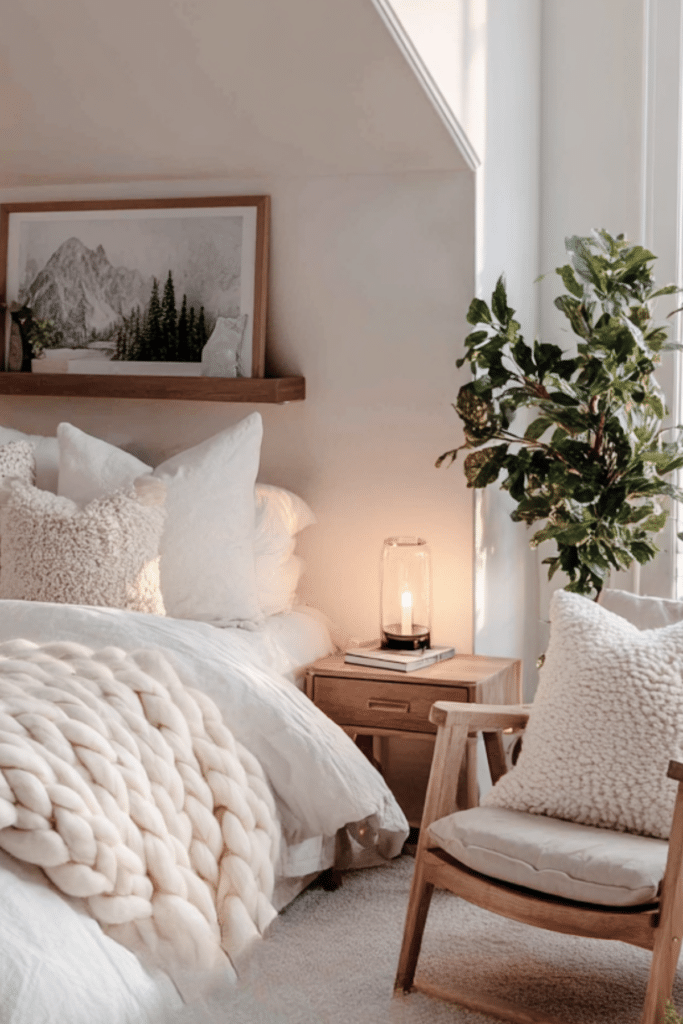
Creating a zen bedroom is a wonderful goal, but if you’re short on space, even a small zen corner can make a meaningful difference.
A simple, calming area dedicated to relaxing and unwinding before bed can help your body shift out of “go” mode and into rest — no full room makeover required.
A Zen corner works best when it feels separate from the rest of your room, even if it’s only a few feet away from your bed.
Start by choosing a spot that supports sleep, not productivity.
Your bedroom already does a lot; it stores clothes, charges devices, collects “I’ll deal with it later” piles.
Your corner can’t compete with that chaos, so it needs a clear job.

First, look at how you actually move through your room at night.
- Where do you toss your bag?
- Where do you drop laundry?
- Where does the overhead light glare the most?
You’re aiming for the opposite.
A corner that stays visually quiet will feel calmer fast.
If you share a room, this matters even more.
You may not control the whole space, but you can control one small zone.
Even a single chair can create the feeling of privacy.
The goal is simple: this spot becomes your “pre-sleep” Zen place, so your bed can stay your “sleep” place.

One more thing, keep the corner easy to reset.
If it takes ten minutes to clear it off, you won’t use it.
When your space is small, “simple” isn’t a style choice; it’s the only way it lasts.
Choose a Quiet Corner with the Fewest Distractions
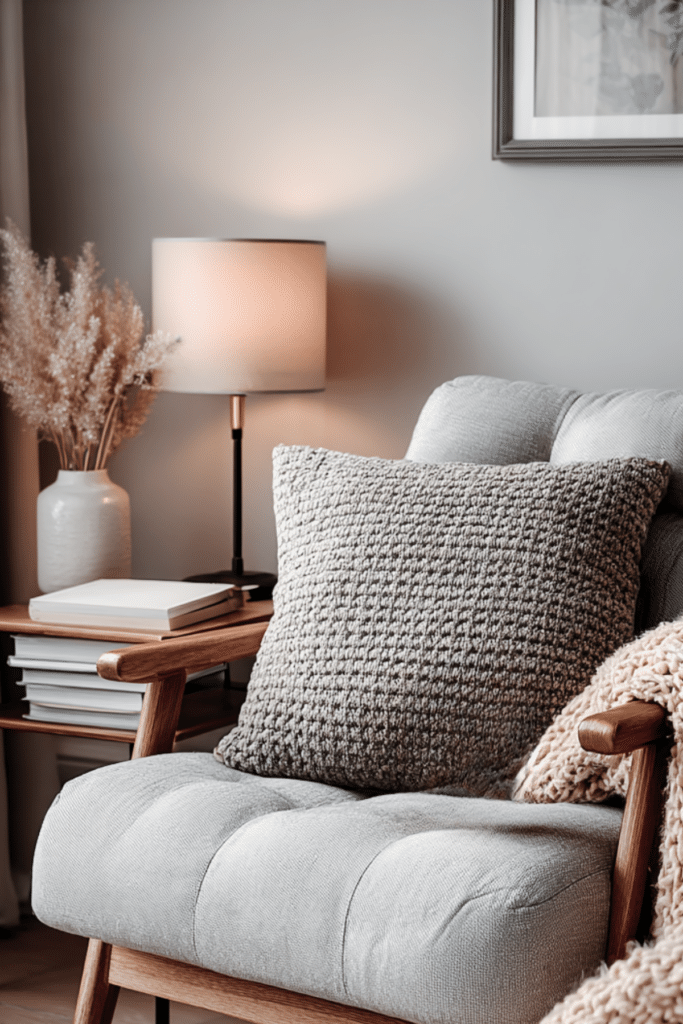
Try to pick a place away from the door, your desk, and any obvious clutter magnets.
Also, watch out for bright windows or mirrors that catch streetlight.
If the best corner is still in the open, you can create a tiny sense of separation.

A few low-effort dividers work well in bedrooms: a tall plant, a small folding screen, a curtain panel on a tension rod, or even positioning your chair to face a plain wall.
Turning your body away from visual noise makes a bigger difference than you’d think.

Here’s a quick checklist you can do in under two minutes:
- Away from traffic: Not in the path between the bed and the door.
- Out of work mode: Not next to a laptop, printer, or paperwork.
- Low glare: No bright window light hitting your face at night.
- Low clutter: No laundry piles within arm’s reach.
- Easy to “close”: You can tidy it in 30 seconds.

If you’re stuck with one option, don’t give up.
Even a bedside corner can work if you keep it minimal and keep tech out.
Decide What You Will Do in the Zen Bedroom Corner

Your brain learns through repetition.
When you use the same spot for the same calming actions, you build a strong association.
That’s what you want: a corner that signals “slow down,” not “catch up.”
Pick two or three allowed activities that feel gentle and realistic at night.
For example, you might read a few pages, do slow breathing, stretch lightly, journal, or follow a short bedtime yoga flow.
Keep it quiet and low-stakes.

Then set clear “not allowed” activities.
Skip work email, social feeds, intense workouts, and anything that sparks debate, stress, or problem-solving.
Even planning tomorrow’s schedule can pull you back into alert mode.
A simple rule helps this stick: no chargers in the corner.
If your phone can’t live there, you’ll stop defaulting to scrolling.
Another option is to keep your phone across the room, so you have to stand up to get it.
That small pause often breaks the habit.
When your corner has one purpose, it stops being a spare surface and starts being a cue for sleep.
Build the Feel of a Zen Corner with Light, Texture, and a Calming Scent

A calming corner isn’t about perfection; it’s about signals.
Your senses are always collecting information, and at night you want the message to be consistent: dim, soft, quiet, safe.
Light sets the timing, texture sets the comfort, and a subtle scent or sound can help your mind stop scanning for what’s next.
Keep it bedroom-friendly.
That means no harsh glare, no strong fragrance that lingers, and no noisy devices that click on and off.
If something might wake you up later, it doesn’t belong in a sleep space.
Use Warm, Low Light That Tells Your Brain it is Nighttime

Overhead lighting keeps you alert.
Instead, use a small lamp with a warm bulb (look for a “soft white” tone).
If you can dim it, even better, because you can slowly lower the light as you get sleepier.

You might like a salt-lamp style glow because it’s gentle and cozy and can be treated as mood lighting.
If you love candlelight, choose LED candles for safety, especially in a bedroom where you might nod off.
Place light below eye level when you can.

A lamp on a low table feels calmer than a bright bulb in your line of sight.
Also, avoid blue light as bedtime gets closer.
That includes bright phone screens and cool-toned bulbs.
A simple lighting recipe that works in most bedrooms:
- One soft lamp near your seat, aimed down or toward the wall.
- One optional accent light, like a tiny night light or LED candle, kept dim.
Add Comfort You Can Feel

If your body feels supported, your mind follows.
Start with one main “landing spot,” either a floor cushion, a meditation pillow, a folded yoga mat, or a comfortable chair.

Next, add one layer of warmth, like a soft throw or a light blanket.
Then anchor the space with texture underfoot; even a small rug helps.
Materials like cotton, linen, and knits tend to feel calm and breathable.

On the color side, quiet tones work best, muted earth shades, soft neutrals, and gentle greens or blues.
If your bedroom is tiny, choose items that disappear when you’re done.

A foldable cushion can slide under the bed.
A storage ottoman can hold your journal and blanket.
You’re aiming for “cozy,” not “pile of stuff.”
Bring in a Gentle Scent or Sound

Scent can be comforting, but strong smells can backfire.
Start small.
A light linen spray on a throw pillow, a reed diffuser used sparingly, or a small bowl of dried lavender can work well.
If you have allergies or sensitivities, skip fragrance and focus on clean air and soft light instead.
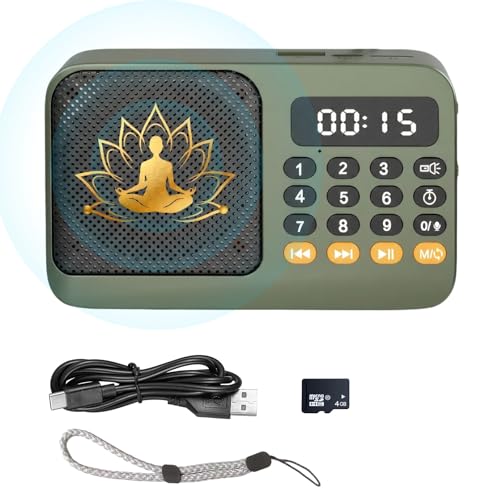
Sound can help too, especially if your home is noisy.
A quiet fan, white noise, or a soft nature track can mask sudden sounds that jolt you awake.
Keep the volume low, and use a sleep timer so it doesn’t run all night unless you prefer it.
Also, keep cords tidy and out of your walking path.
You don’t want to trip when you’re relaxed and sleepy.
Simple Zen Corner Ideas to Try Tonight
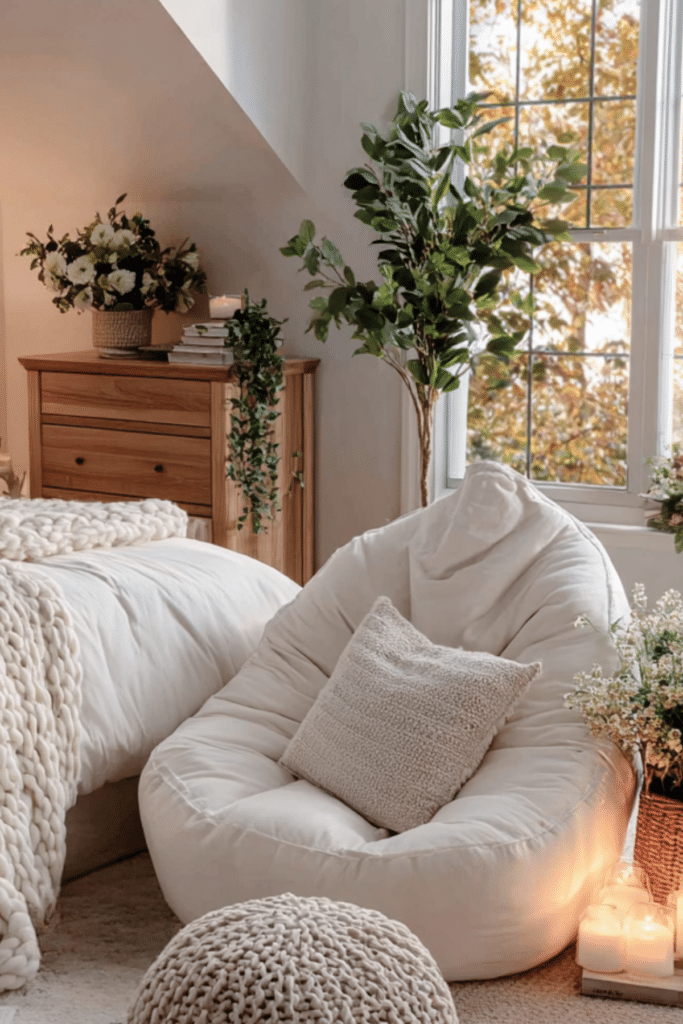
You don’t need to buy a matching set or redecorate your whole room.
You need a small setup that feels inviting, then a routine you repeat until it becomes automatic.
Think of these as “plug and play” corners.
You can start with what you already own, then swap in nicer pieces over time.
Each idea below stays bedroom-appropriate, low light, low effort, and easy to reset.
The 5-Minute Floor Cushion Corner for Breathing and Stretching

Core items: a floor cushion or yoga mat, a folded blanket, a small warm lamp, and a basket for supplies.
Keep the basket simple so it doesn’t turn into storage chaos.
Once you sit down, try this easy breathing rhythm for a few rounds: inhale for 4 counts, exhale for 6 counts.
Then add one gentle stretch, like a seated forward fold or a slow neck release.
Stop well before it feels like exercise.
This corner works because it lowers effort and lowers intensity, which helps your nervous system settle.
The Cozy Reading Nook That Does Not Keep You Awake

Core items: a comfortable seat, a warm reading light pointed down, one book, and a small side table for water or caffeine-free tea.
The “one book” part matters.
Too many choices can keep your brain active.
Choose calm reading that doesn’t spike your adrenaline.
Light fiction, poetry, or essays work well for many people.
The Clutter-Free “Tea and Journal” Reset Corner

Core items: a tray, a mug, a journal, a pen, and one calming object (a smooth stone, a small plant, or a photo).
Keeping it on a tray makes cleanup fast, which keeps the corner from spreading.
Try three short prompts and keep your answers brief:
- What went well today?
- What can wait until tomorrow?
- One thing I’m grateful for.
This works because it gives your thoughts a place to land, so they don’t keep circling once you’re in bed.
The Mini Nature Corner for a Calmer Mood Before Bed

Core items: one easy plant (snake plant or pothos are common choices), one natural texture (a wood tray or woven basket), and a soft lamp.
You’re going for “quiet life,” not a greenhouse.
Pick a plant that tolerates low light and doesn’t need constant attention.

Set a simple watering reminder so you don’t have to guess.
If plants trigger allergies (or you just don’t want another task), use a realistic faux plant or a botanical print instead.
The effect is similar: your eyes get a break from screens and sharp edges.
The Tech-Free Wind-Down Corner for People Who Cannot “Turn Off”

Core items: a simple timer, a paperback book, and a box or drawer for your phone.
The phone container sounds almost silly, but it creates friction, and friction helps.
Try a 20 to 30 minute routine you can repeat: put your phone away, wash your face, sit in the corner, breathe slowly for two minutes, then read a few pages.
After the timer ends, lights out.
Repeating the same steps teaches your body the pattern, like a lullaby made of habits.
Consistency beats intensity. A small routine you repeat will help more than a big routine you avoid.

Final Thoughts
Creating a zen bedroom corner isn’t about adding more to your space — it’s about creating intention.
When your day has been busy, loud, or overstimulating, your body needs a gentle transition into rest.
A small, calming corner can provide that buffer.
It doesn’t have to be elaborate.
A comfortable seat, soft lighting, and a simple wind-down routine are often enough.
The goal is to give your brain consistent signals that the day is wrapping up.
Over time, that repetition makes relaxing before bed feel natural instead of forced.
Small shifts in your environment can make a noticeable difference in how easily you settle in at night.
Need more help with your evening? Grab a free printable night routine checklist below, and we’ll send it straight to your inbox.
Your Turn
Now it’s your turn! I’d love to know — what’s the first Zen corner change you’re going to make? Do you have any other tips to share? Let me know in the comments!
RELATED POSTS:
- Cozy Zen Bedroom Ideas to Create a Sleep Sanctuary with a Color Palette, Bedding, Pillows, and More
- Cozy Minimalist Bedroom: Easy Ideas for a Calming Retreat and Better Sleep
- Boho Bedroom Ideas: Easy Ways to Create a Warm, Earthy & Cozy Sleep Sanctuary
- Relaxing Bedroom Ideas for Better Sleep (Even in a Small Room)
- Cozy Bedroom Color Palette Ideas for Better Sleep
- Cozy Bedroom Ideas for Better Sleep: Easy Tips to Create a Sleep Sanctuary
- Top 15 Bedroom Essentials: My Must Have List for Better Sleep
- The Best Sleep Investment I’ve Ever Made (and Why It’s the BedJet Sleep System)
- How to Build a Sleep Routine That Actually Works
- Sleep Hygiene Tips That Work [Free Printable Checklist Included]
- How To Choose The Right Size Of Mattress Buying Guide
- How to Choose the Best Bed Pillow For Sleeping (Tips From an Expert)



Hi, I’m Debbie, general manager of a mattress store chain with 25+ years helping people improve their sleep quality. At Sweet Sleep Tips, I share natural, practical sleep solutions, calming bedtime habits, and printable tools to help you fall asleep faster and wake up refreshed. My goal is to make better sleep simple, healthy, and stress-free.
Follow me on Pinterest, Instagram, and Facebook to stay up to date with all the latest Sweet Sleep Tips.



The floor cushion is such a great idea. I’ve got to get some, thanks!
Thank you for this post about zen corner ideas for a bedroom. I do follow your tip about not keeping my phone nearby when I go to bed. I like your ideas about calming scents and sounds. Lots of great suggestions to consider!
Thanks for sharing these helpful and inspiring ideas about having a Zen corner for the bedroom to relax and sleep better. My bedroom seems to small for this, but I am having such a corner in my living room, where I spent time before going to bed.
Love the funky book shelf!
I have recently been de-cluttering and making our master bedroom more “zen like” We added some softer lights, a fire place (we live in a colder province so we use it 6 months out of the year) and some natural plants. Love the moon lamp too- my daughter has one in her room that she uses every night.
I love this idea. Thanks for sharing. I’ve wanted to change things up. Now i have ideas.
I love these ideas! I have a zen reading corner in my office space. It has a comfy chair, chill lighting, and my favorite books! I love the idea of adding a relaxing waterfall.
I love the idea of creating a small Zen corner to unwind at the end of the day. The tips about using soft lighting, cozy textures, and keeping the space simple really stood out to me. It’s such a beautiful reminder that you don’t need a huge space to create a calming routine before bed. This definitely inspired me to think about adding a peaceful little corner in my own room.
Awesome post! One habit I have is being on my phone for a long time before bed! That’s a habit I’ve had a very hard time breaking! Interestingly, my phone has been running low on space, so I’ve had to get rid of many apps. Some of the apps I had to let go of were the social media apps. At least I’m not scrolling on social media before bed! lol.
Having a zen corner to unwind is a great idea. With all the noise of life, I agree it’s really important to find a place just for “you”.
What great ideas! I will definitely try this. Thanks for sharing! 💕
I really love your ideas and I have just the right corner in mind! 🙂
I love how you said “consistency beats intensity” that was my main takeaway from your article! Thanks so much 🙂
Love the ideas. I recently added a snake plant into my reading corner and it definitely added a calm energy to the whole area.