

How to Choose the Best Bed Pillow For Sleeping (Tips From an Expert)
Are you tired of waking up with a sore neck or restless nights, wishing you had some better quality sleep? If so, I’ve got you covered with tips to choose the best bed pillow for better sleep so you can finally get the rest you deserve and wake up refreshed each and every morning.
I may earn a small commission for affiliate links in this post at no extra cost to you. Please read my privacy policy and privacy page for more information. As an Amazon Associate, I earn from qualifying purchases.

Choosing the right pillow might seem simple, but anyone who’s tossed and turned all night knows it can make or break your sleep.
Every day in my mattress showroom, I get the privilege of helping customers find their perfect pillow.
I guide them on choosing the best option that supports their neck just right, matches their sleep style, and leaves them waking up refreshed instead of stiff and achy.
I love that moment when someone curls up on a mattress with the perfect pillow, smiles, and says, “This feels amazing!”
That’s why I wanted to put together this pillow shopping guide: to share my expert tips and insider knowledge so you can confidently choose the best bed pillow for your sleep needs and say goodbye to restless nights for good!
So, are you ready to find that perfect bed pillow for your sleep?
Great! Grab a snack, settle in, and let’s get into it!
Start With Your Sleep Style: How You Sleep Shapes Your Best Pillow

Before you think about memory foam, cooling gel, or fancy covers, start with how you actually sleep most of the night.
Your sleep position decides what your pillow must do for your neck and shoulders.
If your pillow does not match your position, your head tilts up or down, your neck twists, and pressure builds.
That is when you wake up stiff, sore, or with a dull headache.
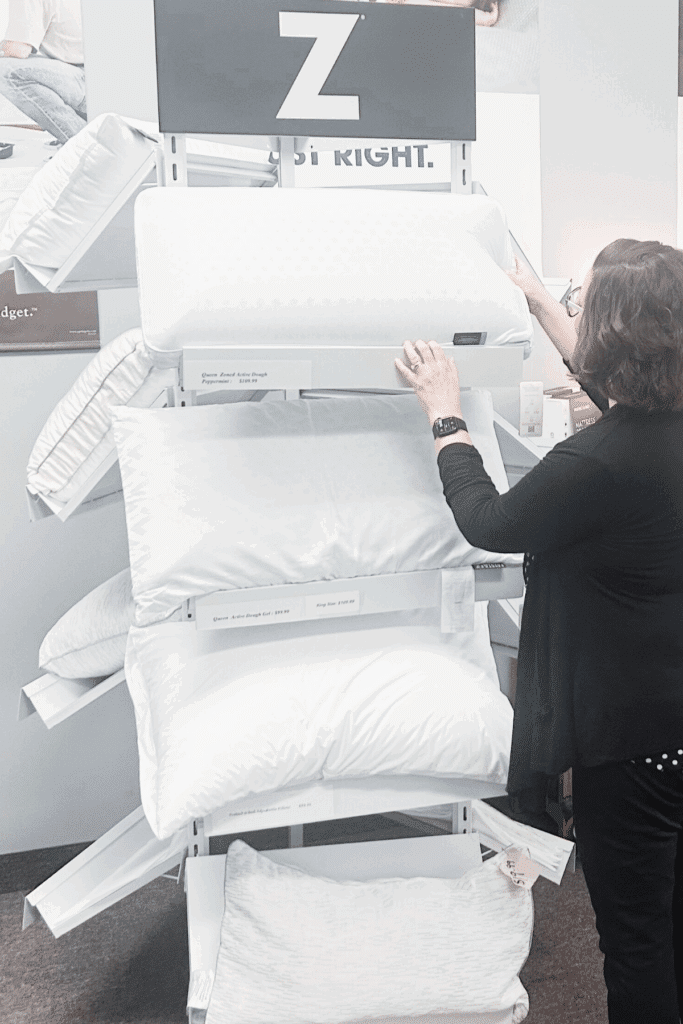
So your first goal is simple: keep your head in line with your spine.
Picture your body as a straight line from the back of your head down to your tailbone.
Your pillow should fill the space between your head and the mattress without forcing that line to bend.
Once you know your main position, you can choose the loft, or height, and firmness that supports your neck in that neutral line.
Then you can pick the material and any special shape.
Back, Side, or Stomach: What Your Pillow Must Do for Each Position

Back sleepers need a pillow that supports the natural curve of the neck without pushing the head too far forward.
A medium loft pillow often works best here.
That means not too thin, not too high.
The pillow should gently cradle the back of your head and support the neck curve so your face looks straight up, not tilted toward your chest.
Memory foam or latex can work well for back sleepers who want solid support.
A softly filled down alternative adjustable pillow (my favorite!) can also work if it has enough loft and does not flatten as soon as you lie down.

Side sleepers usually need the tallest pillows.
When you lie on your side, there is a space between your ear and the mattress that your pillow must fill.
If the pillow is too low, your head sinks and bends toward the mattress.
If it is too high, your head bends away from the mattress.
Both cause neck strain.
Side sleepers often do best with:
- A higher loft pillow that keeps the nose and chin level
- Medium to firm support so the head does not sink too far
- Enough width so the shoulder is not jammed into the mattress edge
If you have broad shoulders, you often need a thicker pillow that lets your shoulder drop into the cutout while your neck stays level.

Stomach sleepers are in a tricky spot.
This position twists your neck to one side and can strain your lower back.
If you cannot switch sleeping positions, use the thinnest, softest pillow you can find, or sometimes no pillow at all under your head.
Some stomach sleepers like a flatter, adjustable pillow under the chest or hips instead of under the head to soften that twist.
Neck, Shoulder, and Snoring Issues: When You Need a Special Pillow Shape

If you wake up most mornings with neck pain, numb shoulders, or your partner says you snore loudly, a standard rectangular pillow may not be enough.
You may do better with:

- A cervical neck pillow that has a curved or contoured shape to hold the neck in line

- A wedge pillow that raises the upper body to help reduce snoring or reflux
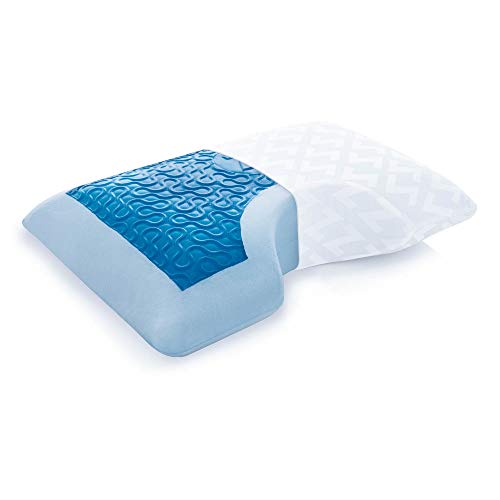
- A shoulder cutout pillow that gives space for a side sleeper’s shoulder while supporting the neck (this is a top seller at my store).
Think of these as tools that target a specific problem.
Key Pillow Materials Explained: Memory Foam, Latex, and Down Alternative

Once you know your main sleep position, the next big choice is what the pillow is filled with.
The fill controls how the pillow feels, how it supports you, how hot or cool it sleeps, and even how easy it is to keep clean if you have allergies.
Here is a quick overview before we begin on each one.

Memory Foam Pillows: Deep Contouring Support for Neck and Spine

Memory foam is popular for a reason.
It softens under your body heat, then slowly molds to the shape of your head and neck.
That contouring spreads weight across a wider area, which reduces pressure points.
If you often wake up with neck pain, a good memory foam pillow can help keep your neck supported in one steady position.
It works very well for back and side sleepers who like a “held” feeling instead of a bouncy one.

You will see two main styles:
- Solid memory foam, which feels dense and very stable
- Shredded memory foam, which is chopped into small pieces so it feels softer, more breathable, and often more adjustable
The main downsides are heat and smell.
Traditional memory foam can trap warmth, especially if the pillow is very solid.
Some pillows solve this with ventilation holes, gel infusions, or cooling covers.
Keep in mind, new foam can also have a light chemical smell at first, so airing it out for a day or two often helps.
Latex Pillows: Bouncy, Breathable Support That Stays Cooler

Latex feels very different from memory foam.
Instead of that slow sink, you get a springy, quick response.
If you press your hand into latex, it pushes right back and reforms as soon as you lift your hand.
This makes latex ideal if you tend to toss and turn.
Each time you change sides, the pillow pops back into shape.
You do not feel stuck, and your head does not stay in a “dent.”
Natural latex also has tiny air pockets that let more air flow through.
That helps it sleep cooler than solid memory foam for many people.
If you run hot but still want strong support, latex is a smart option.

Other perks:
- It is often long-lasting and holds its shape for years
- Many natural latex options appeal to shoppers who want a more eco-friendly choice
On the flip side, latex pillows are heavier than many basic foam or polyester pillows, and the price is usually higher.
If support, bounce, and cooler sleep matter more to you than the lowest price, latex is worth a close look.
Down Alternative Pillows: Soft, Fluffy Comfort Without the Allergens

Down alternative pillows use synthetic fibers, often polyester, to copy the soft, cloud-like feel of real down feathers.
You get a plush, easy-to-fluff pillow that feels cozy and light.
This style often suits:
- Stomach sleepers, because it can be made very thin and soft
- People who like a more “hotel pillow” feel
- Shoppers with allergies who want to avoid real down or feathers

Down alternative is usually the most budget-friendly option, and it is easy to wash and dry, which is a bonus if you like a very clean sleep setup.
The tradeoff is support and lifespan.
These pillows can lose loft faster, especially cheaper ones.
If you are a broad-shouldered side sleeper or you have long-term neck pain, down alternative might not give enough structure unless you choose a very full, high-quality version.
Adjustable Pillows: Custom Loft You Can Add or Remove

Adjustable pillows let you change the height and firmness by adding or removing fill.
You usually unzip the inner cover and scoop out shredded memory foam, latex pieces, or down alternative fibers.
This style helps if:
- You are not sure what loft you need
- Your body changes over time, for example, weight change or pregnancy
- You share a bed and want to fine-tune both sides of a split adjustable set

Adjustable pillows solve the very common “too thick or too thin” problem.
Instead of sending the pillow back, you shape it until it feels right for your neck and sleep position.
Scented Pillows (Peppermint, Eucalyptus, Lavender) for Freshness and Relaxation

Scented pillows weave gentle aromatherapy into your sleep routine.
They usually use infused covers, microcapsules in the fabric, or removable inserts.
Common scents include:
- Peppermint, which feels fresh and crisp
- Lavender, which many people find calming before bed
The goal is not a heavy perfume.
A good scented pillow gives a light hint when you first lie down, then fades as you fall asleep.
While the scent helps your mind relax, the pillow itself should still give proper neck support, so focus on both structure and aroma.
Bamboo Pillows: Soft Covers and Supportive Fill for Cleaner Sleep

When you see bamboo pillow, it often refers to the cover, not the inner foam.
The cover is usually a bamboo-derived rayon blend that feels soft, smooth, and quite breathable.
Benefits you may notice:
- Cooler, drier feel compared with some basic polyester covers
- A smooth surface that is kind to sensitive skin
- Often paired with shredded memory foam or similar supportive fill
Many bamboo pillows are adjustable, so you can remove or add fill through a side zipper.
That lets you match loft to your sleep position while enjoying a cooler, more natural-feeling cover.
How to Test and Choose the Right Pillow for You

Now you have the pieces.
It helps to turn them into a clear, simple process you can follow when you are scrolling through pages of pillows or standing in a store aisle.
Step-by-Step: Match Your Body, Sleep Position, and Main Pillow Type

Use this checklist as your personal fitting guide:
- Pick your main sleep position. Are you mostly a back, side, or stomach sleeper? If you are not sure, notice how you wake up most mornings.
- Note your key issues. Do you run hot? Have allergies? Deal with neck or shoulder pain, snoring, or reflux?
- Choose your core material.
- Memory foam, if you want deep contouring and support
- Latex if you want bounce, cooler sleep, and durability
- Down alternative if you want soft, fluffy comfort and a friendlier price
- Decide if you need a special shape.
- Cervical for neck pain and alignment
- Wedge for snoring, reflux, or reading in bed
- Cooling or shoulder cutout for hot side sleepers with shoulder pressure
- Adjustable if you often find pillows too high or too flat
- Bamboo or scented if you care about fresh feel, breathability, or relaxation
When you match your body, your habits, and your main concerns to a type and material, the choice usually becomes clear instead of overwhelming.
Try Before You Commit: Trial Periods, Return Policies, and Care Tips

Your body needs time to adjust to a new pillow, especially if you move from a flat, worn-out one to a supportive model.
A single night is not a fair test.
Look for:
- A trial window of at least 30 nights, up to around 100 nights for some brands
- Clear return rules, like whether you must keep the original bag and who pays for return shipping
Once the pillow is on your bed, protect your investment:
- Use a pillow protector under the pillowcase to block sweat and oils
- Wash the cover as directed, and spot clean or air out foam and latex instead of soaking them
- Fluff down alternative and shredded foam regularly to keep loft
- Replace most pillows every 1 to 3 years, depending on quality and how they hold their shape
Paying attention to your pillow is one of the simplest ways to upgrade your sleep environment.
A small change at the top of your bed can ripple through your whole day.

Final Thoughts
Finding the right bed pillow can completely transform your sleep, turning restless nights into restful, rejuvenating ones.
From my decades of helping customers in the showroom, I’ve seen firsthand how the right pillow supports your neck and head, keeps your spine aligned, and adapts to your sleep position so you wake up feeling refreshed instead of stiff or sore.
I love helping my customers discover that perfect pillow—it’s amazing how such a small change can make a huge difference in comfort, sleep quality, and even your mood the next day.
Remember, a pillow isn’t just a comfort item; it’s an essential part of your sleep routine and a small investment that pays off night after night.
Need some more help getting great sleep? Check out this sleep meditation free printable to relax before bed tonight. Just enter your email below, and we’ll send it straight to your inbox.
Your Turn
Now it’s your turn! What kind of bed pillow are you interested in trying? Do you have any pillow shopping questions? Let me know in the comments.



RELATED POSTS:
- How to Know When to Replace Mattress (Tips from a Mattress Expert)
- Cozy Zen Bedroom Ideas to Create a Sleep Sanctuary with a Color Palette, Bedding, Pillows, and More
- Ultimate Mattress Buying Guide: Expert Tips to Find Your Perfect Night’s Sleep
- How to Test a Mattress Before Buying in Store (Expert Guide)
- Why Buy a Mattress Protector: What Most Mattress Shoppers Don’t Realize
- How to Choose the Right Mattress Type for Better Sleep
- How to Choose the Correct Mattress Firmness From a Mattress Pro
- How To Choose The Right Size Of Mattress: Buying Guide
- Best Bed Sheets for Hot Sleepers: What to Buy to Stay Cool and Sleep Well
- Find the Best Mattress Topper for Your Sleep: Memory Foam, Latex, Cooling, and More
Hi, I’m Debbie, general manager of a mattress store chain with 25+ years helping people improve their sleep quality. At Sweet Sleep Tips, I share natural, practical sleep solutions, calming bedtime habits, and printable tools to help you fall asleep faster and wake up refreshed. My goal is to make better sleep simple, healthy, and stress-free.
Follow me on Pinterest, Instagram, and Facebook to stay up to date with all the latest Sweet Sleep Tips.





Thanks for these valuable tips on choosing the right bed pillow for a lasting sleep. So helpful.
This is really good information. You can tell this comes from real hands on experience, not just generic advice. I love how detailed and easy this is to follow, especially the way you explain sleep style and neck support. Choosing a pillow really does make or break sleep, and you explained that perfectly. I am saving this for the next time I need another pillow because it is the kind of guide you want to come back to. Great job breaking it all down in a way that actually makes sense.
Thank you for these tips about choosing the best pillow. I had no idea there were special pillows for people who snore. I need to investigate further!
This is so helpful! I have struggled with choosing the best pillow, and this guide is exactly what I need!
This is such a useful guide! Choosing the right pillow can be surprisingly tricky, and I really appreciate the expert tips on finding one that suits your sleep style. Definitely bookmarking this for when it’s time to upgrade my pillow—thanks for sharing!
This is such a helpful post! I love how clearly you broke down what to look for in a pillow! So many people underestimate how much it impacts sleep quality. Definitely bookmarking this for my next pillow upgrade!