

Relaxing Bedroom Ideas for Better Sleep (Even in a Small Room)
Do you crawl into bed tired, but your brain stays wide awake? If so, these relaxing bedroom ideas for better sleep are perfect for you. Keep reading to create a sleep sanctuary perfect to relax at night, fall asleep fast, and then wake up in the morning feeling refreshed.

Waking up feeling exhausted is a common problem for many, and your bedroom might be sending your body mixed signals.
However, the good news is you don’t need a major bedroom remodel to improve your space.
The most effective relaxing bedroom ideas are often small, realistic tweaks that work in master bedrooms, small bedrooms, and on a budget.
After working as a mattress store general manager for decades, I’ve learned firsthand how much sleep affects everything we do in life.
In addition, creating the perfect cozy, relaxing bedroom can help you feel peaceful at night and wake up feeling refreshed in the morning.
To help you create a relaxing bedroom at your own home, I’ll cover the four areas that make the biggest difference: a calming layout, softer light and sound, cozy textures that don’t create clutter, and a simple nightly reset you can actually keep up with.
So, are you ready to create a peaceful, relaxing bedroom ready for sleep?
Great, grab a cozy drink, settle in, and let’s get into it!
I may earn a small commission for affiliate links in this post at no extra cost to you. Please read my privacy policy and privacy page for more information. As an Amazon Associate, I earn from qualifying purchases.
Start With the Basics That Make a Bedroom Feel Calm

A relaxing bedroom supports better sleep because it reduces visual clutter and makes the bed the clear main focus.
When your eyes land on piles, cords, or busy surfaces, your brain stays on alert.
When the room looks simple and steady, your body gets the hint that it’s safe to power down.
You don’t need to buy a matching set of furniture.
Instead, go for quick wins that change how the room feels in a single evening.
Think of your bedroom like a gentle landing strip.
The fewer obstacles and distractions, the easier it is to settle.
Start with what you notice the moment you walk in.
Next, shift your layout so you move through the room without weaving around things.
Then, give yourself a tiny reset routine, so the calm doesn’t disappear by day three.
Declutter the Spots Your Eyes Land on First
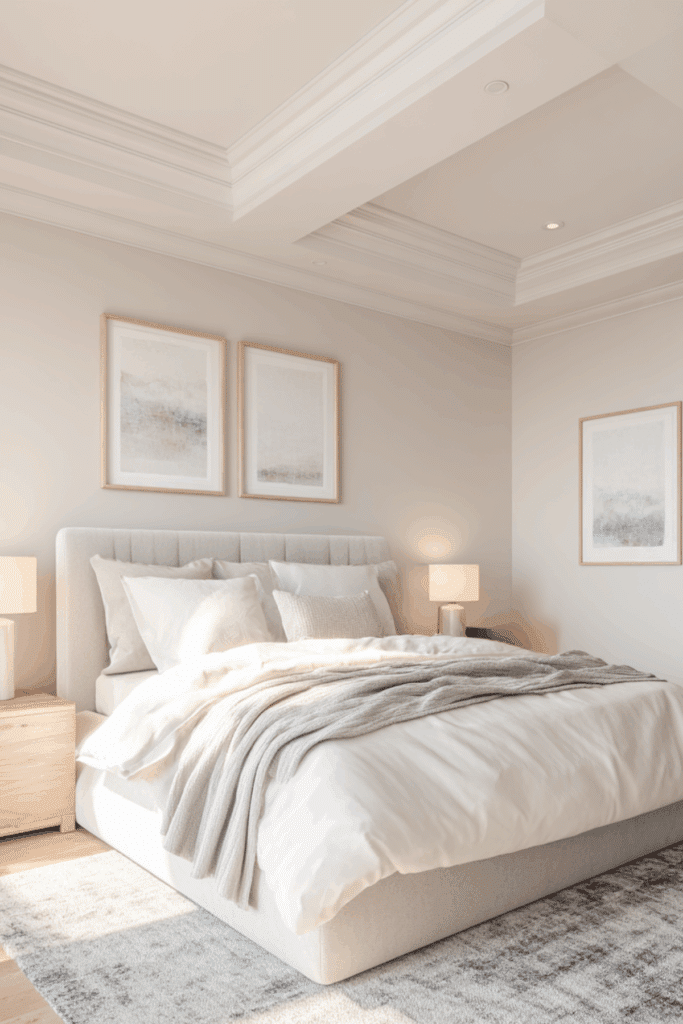
Most bedroom clutter gathers in the same places: the nightstand top, dresser top, and the floor near the bed.
Clear those three zones, and the whole room looks calmer, even if the closet is still a mess.
Try a 10-minute reset that feels almost too simple (that is why it works):
- Set a timer for 10 minutes and grab a small bag or basket.
- Clear flat surfaces first, especially your nightstand and dresser. Put only true bedroom items back.
- Free the floor path, starting from the doorway to the bed, then around the bed.
After that first sweep, add three storage fixes that quietly prevent the mess from returning:
- A basket for throws: Keep it beside a chair or at the foot of the bed.
- A tray for small items: Corral lip balm, rings, and hand cream so they don’t spread.
- Hidden cable management: Use adhesive cord clips or a cable box to hide the “cord nest.”
A few items almost always keep your sleep lighter. If you can, keep these out of the bedroom:
- Work papers and laptops
- Gym gear and sweaty shoes
- Random charging cords and old tech
When your bedroom stops doubling as an office or storage unit, your brain stops scanning for tasks.
Arrange Furniture So Your Body Relaxes Faster

Layout affects how you feel more than most people realize.
A clear, simple path tells your nervous system, “Nothing to solve here.”
Start with these easy rules:
Keep a clean walkway to the bed, so you don’t sidestep clutter at night.
Avoid blocking windows, because natural light helps your sleep schedule in the morning.
Then make the bed the visual anchor, meaning it should be the first thing that looks intentional.
In a small room, you can still create that grounded feeling.

Use slim nightstands (or even floating shelves) to open up floor space.
Swap bulky bedside lamps for wall-mounted plug-in lights or clamp lamps.
You get light where you need it without crowding the surface.
Use Light, Color, and Sound to Set a Sleep-Friendly Mood

Your brain takes cues from your environment all day.
Bright light late at night can signal “stay alert.”
Harsh colors can feel visually loud.
Random noise can keep part of you listening for problems, even if you’re exhausted.
The goal isn’t silence and darkness at 7 pm.
It’s a gentle shift from day mode to night mode.
If you get that right, your room starts to feel like a calm container for rest, not another place to scroll, work, and worry.
A few changes cost almost nothing.
You can swap a bulb, move a lamp, or soften sound tonight and notice a difference fast.
If your bedroom feels “off,” check the light first. It’s often the quickest mood fix.
Pick Calming Bedroom Colors
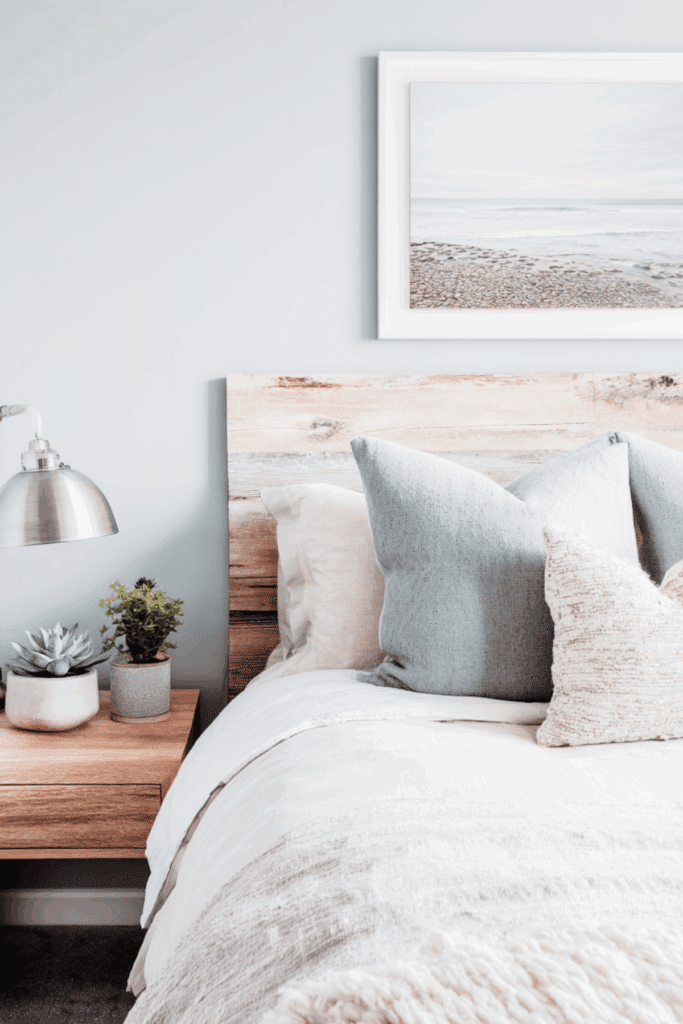
Choosing the right bedroom color palette sets the background tone, like music you barely notice until it’s too loud.
For a relaxing bedroom, go for shades that feel soft and steady instead of sharp.
These palettes tend to work in most homes:
- Warm off-whites and creamy beiges
- Soft taupe and light sand tones
- Muted greens (think dried herbs, not neon)
- Dusty blues (a little gray mixed in)
Warm tones have a hint of yellow, red, or beige.
Cool tones lean toward gray, blue, or icy white.
If your room already feels chilly, choose warmer neutrals.
If it feels heavy or dim, a soft, airy, warm white can brighten without turning harsh.
If you rent, you still have options.
Use bedding, curtains, and removable art to bring in calmer colors.
Peel-and-stick wallpaper can work too, especially on one wall behind the bed.
Also, watch the contrast near where you sleep.
High-contrast patterns, like stark black and white stripes, can feel energizing.
Save bold prints for a pillow or a small accent, then keep the main bedding calmer.
Layer Your Lighting So Evenings Feel Softer
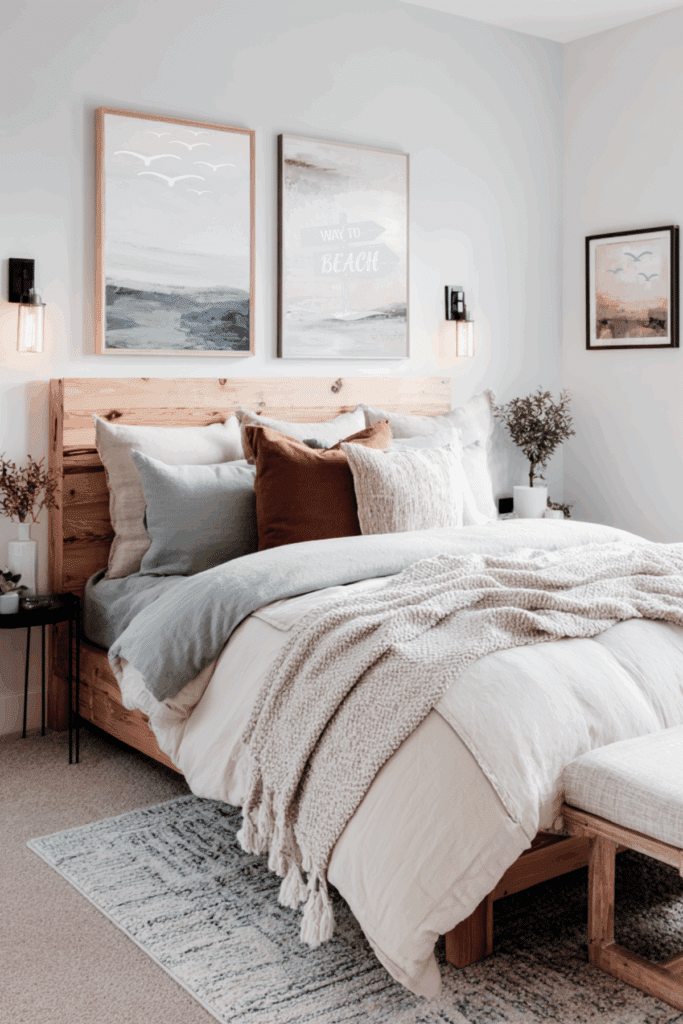
One bright ceiling light can make your bedroom feel like a waiting room.
Instead, aim for three simple lighting layers:
Overhead lighting is for cleaning or finding things fast.
Task lighting is for reading or getting ready.
Ambient lighting is the soft glow that signals “slow down.”
You don’t need new fixtures to make this work.
Start with warm bulbs (often labeled “soft white”).
Then add light at lower heights, like bedside lamps or a small lamp on a dresser.
Light that glows from the side feels gentler than light pouring down from above.
Try this night routine for a week:
Turn off overhead lights one hour before bed.
Use lamps only after that.
Then switch to a small bedside light for reading, and shut it off when your eyes get heavy.
You are teaching your body a repeatable pattern, and repeatable is calming.
Quiet the Room, or Add Sound That Helps You Drift Off

Noise is sneaky.
You might think you’re used to it, but your brain still tracks it.
Start by reducing the sharp sounds that break your attention.
A few budget-friendly fixes can help:
Use a door draft stopper if hallway noise leaks in.
Hang thicker curtains to soften street sound.
Add a rug if your floors echo.
If you can, move the bed away from a shared wall, even by a few inches.
Soft wall hangings can also dull sound, especially in rooms that feel “hard” and empty.
If quiet isn’t possible, sound masking can help.
A fan works well, and so do white noise or brown noise tracks.
Keep the volume low, about the level of a soft shower.
Place the sound source across the room if you can, so it blends into the space instead of feeling like it’s right in your ear.
Most importantly, keep it consistent.
Your brain relaxes faster when bedtime sounds stay predictable.
Add Cozy Comfort Without Making the Room Feel Messy
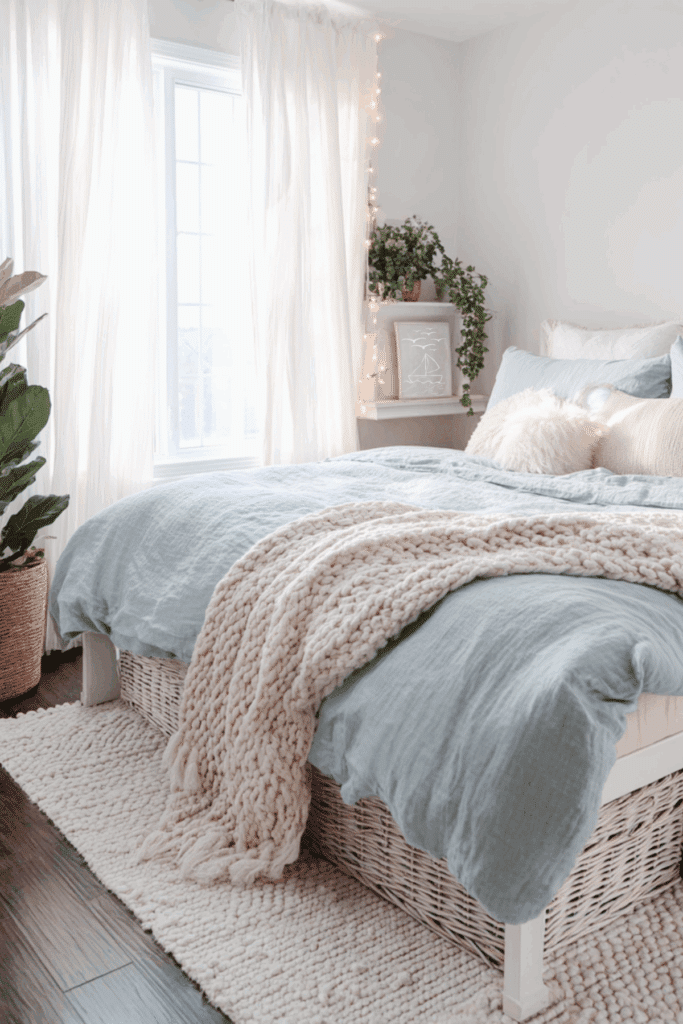
Comfort helps you fall asleep, but too many “cozy” items can turn into clutter.
The trick is choosing a few textures that feel good and look calm, then giving each one a clear home.
Think of your bedroom like a warm drink.
You want it soothing, not overflowing.
When your bedding feels inviting, the air feels fresh, and the room stays slightly cool, your body has fewer reasons to wake up.
You don’t have to spend a lot here.
Small upgrades, like sheets or a washable rug, can change your sleep more than decorative stuff.
Build a Bed That Feels Like a Soft Landing
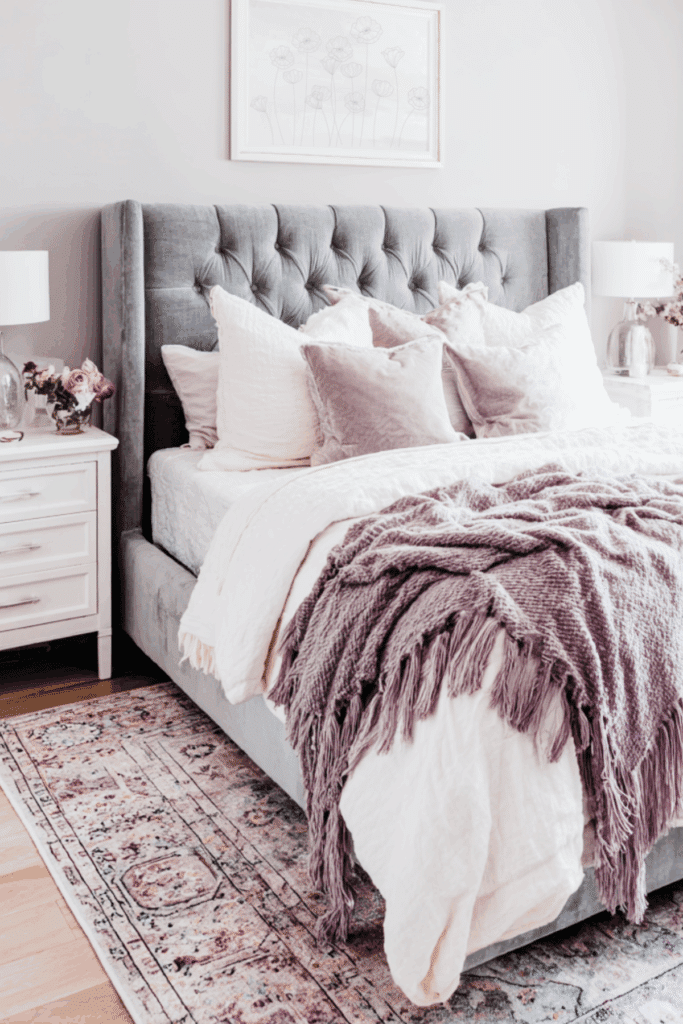
Your bed should feel like the easiest place to be.
Keep the setup simple, so it looks calm and functions well.
A solid bedding formula looks like this:
- Breathable sheets (cotton percale, cotton sateen, or linen)
- One light blanket for comfort and layering
- One warmer layer (a duvet or quilt) for colder nights
- Bed pillows that match how you sleep
Pillows matter more than people think.
If you sleep on your side, you usually need a thicker pillow to fill the space between your shoulder and neck.
Back sleepers often do better with a medium loft.
If you sleep on your stomach, a thinner pillow can help prevent neck strain.
For a calmer look, limit the color mix on the bed.
Two to three main colors are plenty.
Skip the pile of throw pillows if they end up on the floor every night.
One accent pillow or a folded throw is enough.
Freshness helps too.
Wash sheets weekly if you can, especially if you sweat or have allergies.
A clean bed feels like a reset button.
Use Scent and Air Quality Carefully So It Stays Relaxing
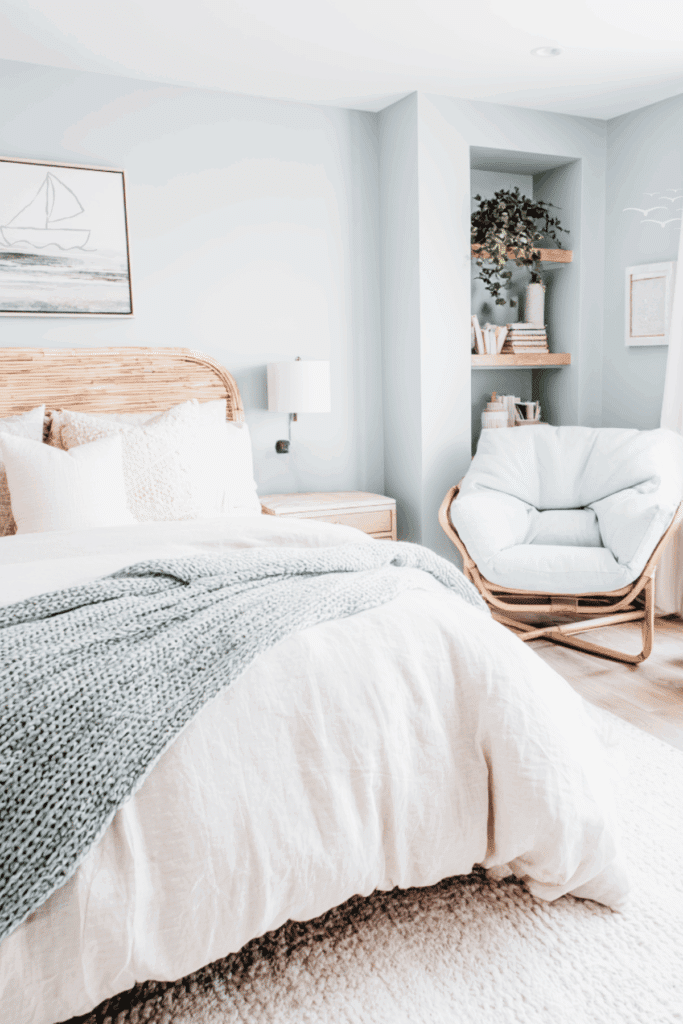
Scent can be soothing, but it can also be distracting.
Keep it gentle and consistent, like background music, not a loud playlist.
A few low-effort options:
Linen spray can feel fresh if you use a light hand.
Sachets in a drawer add a mild scent without filling the whole room.
If you like essential oils, run a diffuser briefly while you get ready for bed, then turn it off before you sleep.
Avoid strong candles right before bedtime.
Besides the safety issue, heavy fragrance can stick in the air and feel like “too much” when you’re trying to unwind.
Air quality affects sleep in quiet ways.
Let in fresh air when weather allows, even for 10 minutes.
Replace HVAC filters on schedule if you control that in your home.
If allergies bother you, a bedroom air purifier can help, especially during high pollen months.
The best bedroom scent is subtle. If you notice it constantly, it is probably too strong.
Get the Temperature and Textures Right for Deeper Sleep
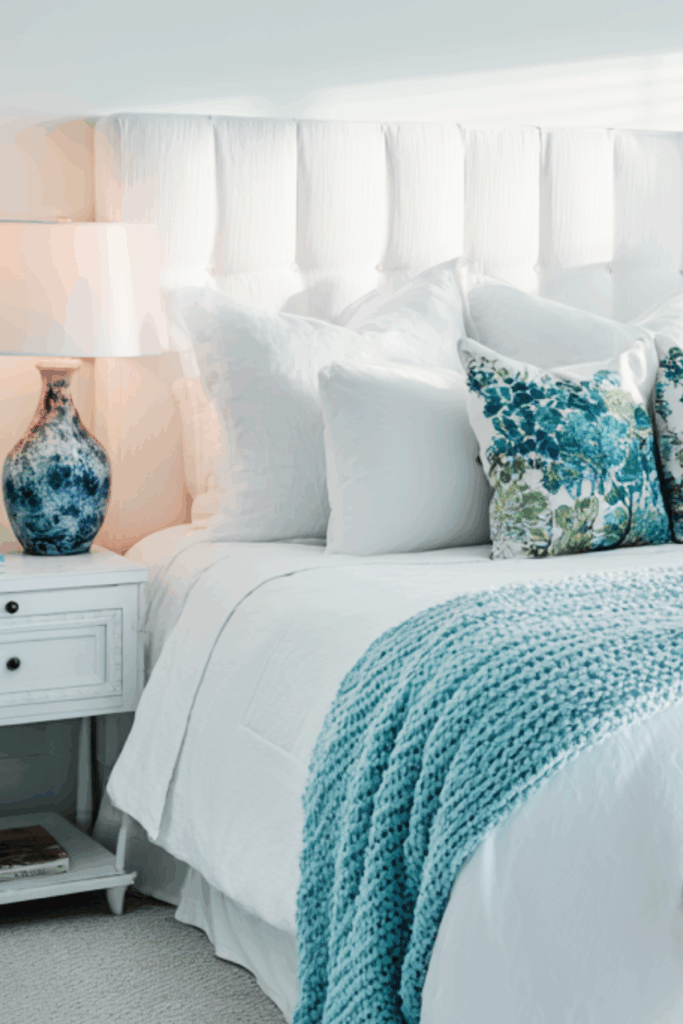
Most people sleep better in a slightly cool room.
When you’re too warm, you wake more often.
When you’re too cold, your body tenses.
Start with easy fixes.
Choose breathable cotton or linen layers if you overheat.
Switch to a lighter duvet insert in warmer seasons.
A fan can help even if the room isn’t hot, because moving air feels cooler on your skin.
Humidity matters too.
If your air feels dry and you wake with a scratchy throat, a small humidifier can help.
On the other hand, if your room feels damp, moisture absorbers or better airflow can make it feel fresher.
Textures can also support better mornings.
Put a cozy rug or washable runner next to the bed if your floors are cold.
Then keep an extra layer within reach, like a cardigan or throw in a basket.
That way, you won’t get up and fully wake yourself when the temperature shifts at 3 am.

Final Thoughts
I’ve learned firsthand that sleep improves when your bedroom stops asking your brain to stay alert.
You don’t need perfection, you need the right basics: a calm layout, softer light and sound, and cozy comfort that stays tidy.
Try this 15-minute plan tonight:
- Clear the nightstand and floor path to the bed.
- Switch to lamp light only for the last hour, using a warm bulb.
- Set out one comfort upgrade, like a breathable blanket layer or a cooler sheet.
Then keep it simple.
Change one thing at a time, and notice how your sleep feels over the next week.
Small shifts add up fast when you repeat them, and your bedroom starts to feel like the safest place in your home to truly relax and get amazing rest.
Need more help relaxing at night? Grab a free printable night routine checklist, and we’ll send it straight to your inbox.
Your Turn
Do you have any other relaxing bedroom ideas to add to the list? Which of these peaceful bedroom tips are you trying at your home? Let me know in the comments.
RELATED POSTS:
- Cozy Bedroom Color Palette Ideas for Better Sleep
- Cozy Coastal Bedroom Ideas: Neutral, Modern, and Chic for a Relaxing Space
- Best Evening Routine for Better Sleep: Simple Habits That Work
- Zen Corner Ideas for the Bedroom to Relax and Sleep Better
- Relaxation Exercises for Sleep That Calm a Busy Mind
- Sleep Art for Main Bedrooms, Guest Rooms, Nursery, and Kids Rooms That Feel Cozy and Dreamy
- How to Create a Comfy Bed for Better Sleep Tonight
- Cozy Minimalist Bedroom: Easy Ideas for a Calming Retreat and Better Sleep
- Cozy Bedroom Ideas for Better Sleep: Easy Tips to Create a Sleep Sanctuary
- Top 15 Bedroom Essentials: My Must Have List for Better Sleep
- Cozy Zen Bedroom Ideas to Create a Sleep Sanctuary with a Color Palette, Bedding, Pillows, and More
- The Best Sleep Investment I’ve Ever Made (and Why It’s the BedJet Sleep System)
- How to Build a Sleep Routine That Actually Works
- Sleep Hygiene Tips That Work [Free Printable Checklist Included]
- How To Choose The Right Size Of Mattress Buying Guide
- How to Choose the Best Bed Pillow For Sleeping (Tips From an Expert)


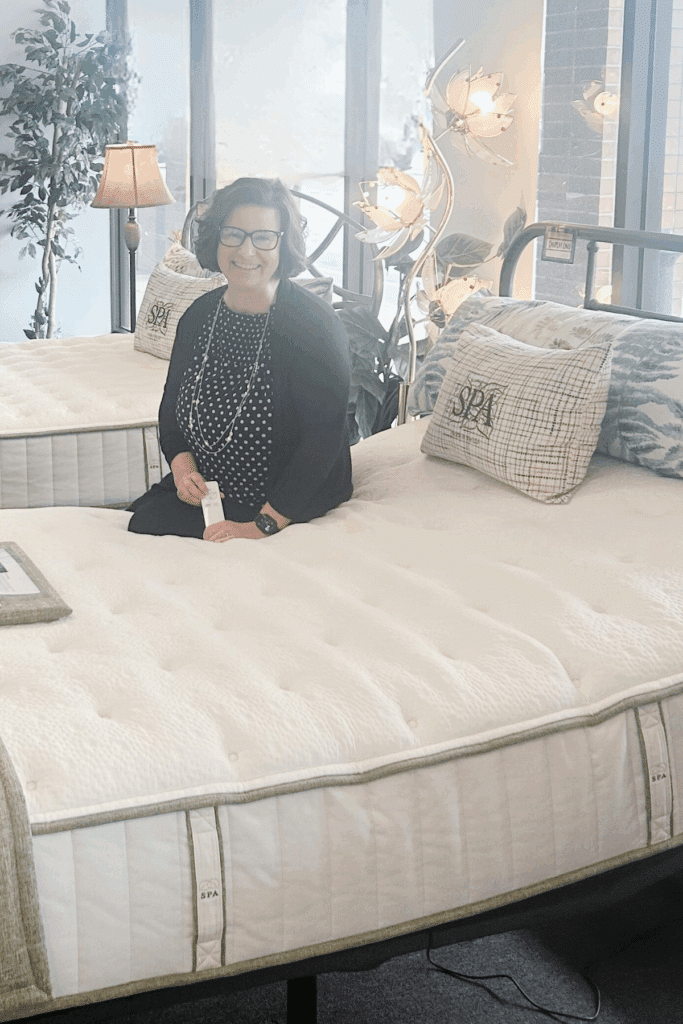
Hi, I’m Debbie, general manager of a mattress store chain with 25+ years helping people improve their sleep quality. At Sweet Sleep Tips, I share natural, practical sleep solutions, calming bedtime habits, and printable tools to help you fall asleep faster and wake up refreshed. My goal is to make better sleep simple, healthy, and stress-free.
Follow me on Pinterest, Instagram, and Facebook to stay up to date with all the latest Sweet Sleep Tips.




Super helpful! Love how practical this is. The 10 minute reset (nightstand/dresser/floor path) and switching to warm lamp light are such quick wins especially in a small room. Trying the tray and cord clips idea tonight!