
How to Sleep With Wet Curly Hair Without Waking Up to Frizz
Do you have curly hair and struggle with how to safely style it after a shower before bedtime? If so, you’re definitely not alone. Keep reading to learn how to sleep with wet curly hair the easy way so you can wake up with happier, healthier curls tomorrow morning.
If you have curly hair, you already know that bedtime can be a little… complicated.
Add wet hair into the mix, and it can feel like a full nighttime strategy is required.
As someone with naturally curly hair, I’ve definitely been there!
This is especially true during the summer months when I find myself swimming after work and heading home, washing my hair, and ending up with soaking wet curls before bed.
On those nights, I still want to wash, condition, and style my hair, but I also want to get to bed without waking up to a tangled, flattened mess.
Over the years, I’ve tried just about every method for sleeping with wet curly hair—some worked beautifully, and others… not so much.
Through plenty of trial and error, I’ve discovered a handful of easy techniques that help curls dry nicely overnight while keeping frizz and breakage to a minimum.
If you’re wondering how to sleep with wet curly hair without ruining your curls (or your pillowcase), you’re in the right place.
To help you find the perfect curly hairstyles for wet hair to sleep in, I’m sharing the simple tips, curly-friendly styles, and bedtime habits that have made a huge difference for my nighttime hair routine.
Whether you’re coming home from the pool, showering late at night, or just trying to simplify your routine, these ideas can help you wake up with happy, healthy curls.
So, are you ready to get into it? Great! Let’s go!
I may earn a small commission for affiliate links in this post at no extra cost to you. Please read my privacy policy and privacy page for more information. As an Amazon Associate, I earn from qualifying purchases.
Do This Right After Your Shower So Your Curls Dry in a Good Shape

Going to bed with soaking wet hair sounds harmless, but your pillow can undo hours of good curl days.
Water makes hair swell and stretch, so your curls can dry longer and looser than you wanted.
Add pressure from your head on the pillow, and you get smashed sides, bent ends, and frizz that starts at the crown.
A damp scalp can also feel itchy by morning.
In some cases, it can start to smell “off,” especially if you use heavy products and your roots never dry.
So your goal is simple: get your hair damp, not dripping, then set your curl shape with product, and finally choose a sleep method that protects your pattern.
Start with “Damp, Not Dripping” and Use a Curl-Friendly Towel

Right after rinsing, your curls are at their most fragile.
Rubbing them with a towel is like roughing up a sweater; you’ll raise the fibers and invite frizz.
Instead, treat water removal like you’re pressing moisture out of a sponge.
Here’s a fast routine that works for most curl types:
- Flip your head forward or to the side, so curls fall away from your scalp.
- Cup sections of hair in your hands and squeeze gently, moving from ends up toward the mid-lengths.
- Blot with a microfiber towel or a soft cotton T-shirt. Press, hold for a second, then release.
- Repeat in a few spots, especially at the nape and crown, where hair loves to stay wet.
You’re aiming for a clear “timing cue”: your hair should feel cool and damp, but it shouldn’t drip onto your neck or shirt.
If you see steady drips, you’re not ready for bed yet.
Thick, high-density curls need extra attention because they hold water deep inside the clumps.
In that case, focus on the roots too.
Press the towel against your scalp in a few sections, then lift it away.
Keep it gentle, because friction at the root is where halo frizz starts.
If your curls still feel heavy and wet after a few minutes of blotting, give yourself 5 extra minutes now. You’ll save time in the morning.
Apply Products in a Simple Layering Order That Holds Overnight
Nighttime hair needs a different mindset.
You’re not just styling for the next hour; you’re styling so your curls survive eight hours of movement.
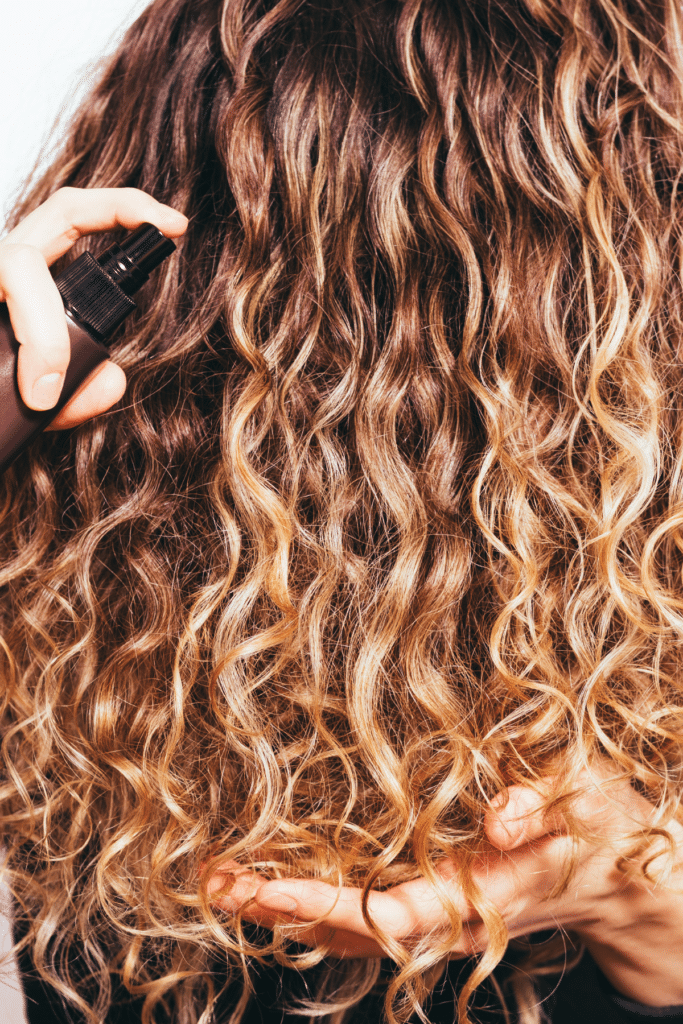
A simple, reliable order looks like this:
- Leave-in conditioner for slip and softness
- Curl cream (optional) for shape and thicker clumps
- Gel or mousse for hold that lasts through sleep
Hold matters because it acts like a light cast around the curl.
That cast reduces frizz and helps curls keep their shape when they get pressed against fabric.
If your hair often looks good at night but wild in the morning, you probably need stronger hold, not more conditioner.
A few practical tips keep the results from feeling crunchy or greasy:
- Use less product near the roots, especially creams and oils. Roots stay wet longer, so heavy products can feel gunky by morning.
- If your hair starts drying while you style, add a few spritzes of water and smooth product over that damp surface. Curls clump better when they’re evenly wet.
- For fine curls, pick a lightweight leave-in and a mousse or a gel labeled “strong hold” or “firm hold.” Too much cream can pull your curl down.
- For coarse curls, a richer leave-in plus a cream can help with softness, then finish with gel to lock it in.
You don’t need a complex routine.
You need the right balance: moisture for flexibility, and hold for curl memory.
Pick a Sleep Method That Matches How Wet Your Hair Is

Your best method depends on two things: how damp your hair is at bedtime, and how easily your curls flatten.
If your hair is almost dry, you can focus on shape and friction.
If it’s still quite wet, you also need airflow and a plan that won’t trap moisture at the scalp.
This quick comparison can help you choose:
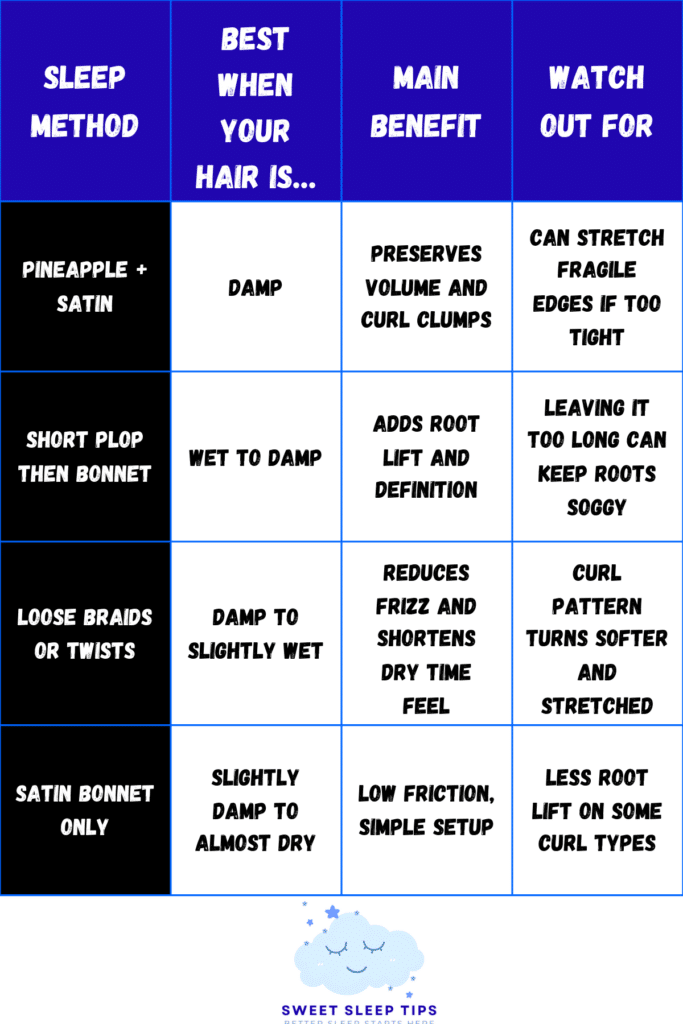
In other words, you’re matching your hair’s moisture level to the amount of structure you add before bed.
The Pineapple Plus Satin Works Best When Your Hair is Damp

The pineapple is a classic for a reason.
It keeps curls up and away from the pillow, so you don’t wake up with one side smashed flat.
It also protects your ends, which tend to frizz first.
Here’s a simple way to do it without creating dents:
- Flip your head forward and gather hair at the top of your head.
- Use a soft scrunchie, not a tight elastic.
- Loop once or twice only, keeping it loose enough that curls aren’t yanked upward.
- Leave the ends relaxed, so you don’t create a sharp bend.
- Add a satin bonnet over the pineapple, or sleep on a satin pillowcase.
Satin matters because cotton steals moisture and creates friction.
That combo can rough up the cuticle and turn a good curl clump into a frizzy cloud.
If your curls are short and won’t reach a pineapple, you still have options.
You can do two or three small “mini pineapples” across the top, or skip the tie and use a bonnet alone.
The key is keeping curls contained and protected, not perfectly piled.
Plopping Overnight, When You Need More Root Lift and Definition

Plopping is like giving your curls a supportive “nest” while they set.
It can boost definition and lift at the root, which helps if your hair dries flat on top.
To plop, lay a microfiber towel or cotton T-shirt on a bed, chair, or counter.
Then flip your hair forward so curls land in the center.
Wrap the fabric around your head and tie it so your hair stays gathered gently.
The word “gently” is doing a lot of work here.
If your plop feels tight, your curls will dry in a bent position.
That can create odd kinks and a sore scalp.
You want secure, not squeezed.
Plopping all night can work for some people, but it’s risky if your hair stays wet for hours.
Too much trapped moisture can lead to scalp discomfort and that stale, damp smell.
A simple safety rule helps:
- If your scalp still feels very wet after 20 to 30 minutes, switch methods.
Many curlies get the best of both worlds by plopping for 15 to 30 minutes, then taking it down and moving to a bonnet or satin pillowcase for the rest of the night.
You keep the lift, while letting your roots breathe.
Loose Braids or Twists, When You Want Stretched, Less Frizzy Curls

If you want a softer look with less shrinkage, loose braids or twists can be a great bedtime choice.
This method also helps very thick hair because it spreads the hair out, which can make drying feel less swampy.
Instead of one tight braid, aim for 2 to 6 loose braids or twists. More sections mean less tension and fewer weird bends.
A few details make a big difference:
- Smooth a tiny bit of cream or gel on the last inch of your ends, so they don’t fray overnight.
- Use a soft tie or a small scrunchie. Tight bands leave dents.
- Keep the braid or twist loose at the root, especially around your hairline.
Set your expectations, though.
You won’t wake up with the same curl clumps you get from air drying.
You’ll get a stretched, blended pattern, kind of like your curls took a deep breath and relaxed.
For many people, that’s the whole point.
Protect Your Scalp, Pillow, and Curl Pattern While You Sleep

When you sleep with wet curly hair, comfort and hygiene matter just as much as definition.
Wet hair pressed against fabric can cause breakage over time, especially at the crown and ends.
A damp scalp can also feel tender, itchy, or just unpleasant.
The fix isn’t complicated.
You’re creating a low-friction setup, keeping hair from being crushed, and preventing that “wet all night” situation.
Keep Friction Low with Satin, and Keep Hair From Getting Crushed
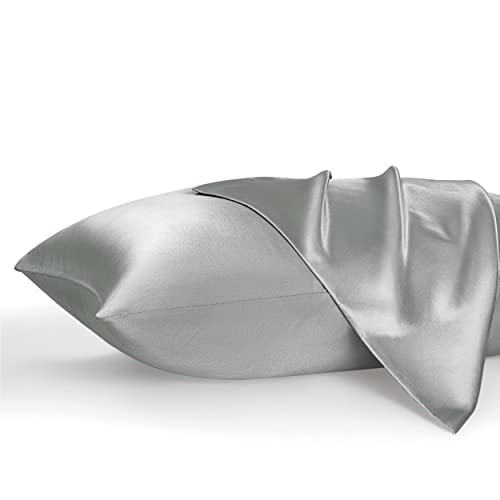
Cotton pillowcases are rough on curls.
They create drag, which separates curl clumps and encourages frizz.
Satin reduces that rubbing, so your curl pattern stays more intact.

You have two main options:
- Satin bonnet: Great protection, especially if you toss and turn. It also keeps curls contained.
- Satin pillowcase: Nice backup if you hate bonnets, or if your bonnet slips off.

The best choice is the one you’ll actually use.
If a bonnet gives you a headache, it’s too tight.
Look for a comfortable band, and avoid pulling it low and snug over your ears.
If you need extra lift at the crown, you can clip hair loosely on top before the bonnet.
Use a gentle claw clip and keep it relaxed.
Tight clips and tight ponytails can stress your edges, and that tension adds up.
Avoid the “Wet All Night” Problem That Can Make Hair Smell or Itch

Some hair types just don’t dry well overnight, especially very thick curls or hair with lots of product at the roots.
If you wake up with a damp scalp often, adjust your routine rather than pushing through it.
A few easy fixes usually work:
Spend 5 to 10 minutes diffusing the roots before bed.
You don’t have to dry the lengths fully.
Getting the scalp area closer to dry helps a lot.
A small fan in the room can also help, since moving air speeds drying.
In addition, a slightly warmer room can prevent you from feeling chilled with damp hair.
Product load matters too.
Heavy creams and oils can slow drying, so try using less at night, mainly on mid-lengths and ends.
If you love cream, keep gel as your top layer for hold, then go lighter near the scalp.
Some nights, it’s smarter not to sleep with wet hair.
Pay attention to these signs:
- Your hair is still dripping when you’re ready for bed.
- Your scalp feels swampy even after blotting.
- You’re prone to scalp irritation, and dampness makes it worse.
That’s not a failure, it’s good information.
On those nights, dry a bit more first, even if it’s just the roots.

Final Thoughts
Learning how to sleep with wet curly hair can feel a little tricky at first, but once you find the right routine for your curls, it becomes so much easier.
With the right protective hairstyle, a few curl-friendly products, and a comfortable sleep setup, you can let your hair dry overnight without worrying about frizz, tangles, or flattened curls in the morning.
As someone with curly hair, I know how tempting it can be to just go to bed with soaking wet hair and hope for the best.
Trust me, I’ve done it plenty of times after late summer swims or evening showers.
But taking a few extra minutes to gently style and protect your curls before bed can make a big difference in how your hair looks and feels the next day.
The good news is that there isn’t just one “right” way to sleep with wet curly hair.
Some people love a loose braid, others prefer the pineapple method, and some curls do best when left down with a silk pillowcase.
The key is finding what works best for your curl pattern and nighttime routine.
Need some more help with your night routine? Grab a free printable night routine checklist, and we’ll send it straight to your inbox.
Your Turn
Now I’d love to hear from you! Do you ever go to bed with wet curly hair, or do you prefer to let it dry before sleep? What are your favorite nighttime curly hair tips that help you wake up with great curls? Let me know in the comments.

RELATED POSTS:
- Cute Night Hairstyles for Sleep for Curly, Straight, or Wavy Hair
- Sleep Hairstyles You’ll Want to Start Wearing Tonight for Better Hair Tomorrow
- Bedtime Hairstyles for Sleep: Protect Your Hair Without Losing Comfort
- Protective Hairstyles For Sleeping for Curly, Wavy, and Straight Hair
- How To Sleep With Wet Hair the Right Way (No Frizz, No Stress)
- How to Sleep With Curly Hair: Easy Tips for Curly Hairstyles
Hi, I’m Debbie, general manager of a mattress store chain with 25+ years helping people improve their sleep quality. At Sweet Sleep Tips, I share natural, practical sleep solutions, calming bedtime habits, and printable tools to help you fall asleep faster and wake up refreshed. My goal is to make better sleep simple, healthy, and stress-free.
Follow me on Pinterest, Instagram, and Facebook to stay up to date with all the latest Sweet Sleep Tips.





These are great tips! These are the steps I take when I go to sleep with damp curly hair. I need to try a bonnet!
I love these tips. I have curly hair too, and I learned the hard way that rubbing with a regular towel just turns my hair into a frizzy mess. Using a soft T shirt and gently pressing the water out makes such a difference.
I also wash my hair at night sometimes, so this reminder about getting rid of the extra moisture before going to bed is really helpful. When my hair is still too wet, I definitely wake up with curls that look flattened or strange on one side.
Great advice here, especially about being gentle and letting the curls stay together instead of roughing them up. Curly hair really does need that extra care.
I just purchased the Bonnet as I really needed something to cover my hair better.
Curly hair is the worst to sleep on wet hair. great suggestions. I use a silk bonnet and silk pillow case to help with the frizz, but i still get them then next day!