

How to Test a Mattress Before Buying in Store (Expert Guide)
Are you shopping for a new mattress and tired of leaving the showroom more confused than when you walked in? After more than 25 years in the mattress industry, I totally get it! But, I’ve got you covered with expert tips I use every day to help my customers learn how to test a mattress effectively and find the perfect fit for their needs.
I may earn a small commission for affiliate links in this post at no extra cost to you. Please read my privacy policy and privacy page for more information. As an Amazon Associate, I earn from qualifying purchases.
As I said, I totally get how walking into a mattress store can feel overwhelming!
There are so many options, different feels, and all those little details that make a mattress “just right.”
One of my favorite parts of the day is guiding customers through the art of testing a mattress.
I love watching their eyes light up when they finally find one that feels perfect—the way it cradles their body, supports their spine, and just “clicks” with their sleep style.
After spending decades in a mattress showroom, I’ve learned a few insider tips that make knowing how to test a mattress easier, more effective, and even a little (dare I say!) fun.
To help you on your mattress shopping journey, I’m sharing everything you need to know to test a mattress like a pro so you can confidently select the best option for your unique sleep needs.
So, are you ready to get started? Great! Grab a snack, settle in, and let’s get into it!
Know Your Body and Mattress Terms Before Shopping

Before you ever touch a mattress, you want a clear picture of what your body needs.
That way, your time in the store has a goal, not random trial and error.
Think about three things: how you sleep, where you hurt, and what kind of mattress firmness you like.
Think About Your Main Sleep Position and Common Pain

Your main sleep position changes what kind of support you need.
Here is a simple guide:
- Side sleepers need more pressure relief at the shoulders and hips, so they often do best on soft to medium mattresses with some cushioning foam on top.
- Back sleepers need steady lower-back support, so a medium to medium-firm mattress that holds the hips up is often best.
- Stomach sleepers need a firmer feel, with some cushion on top, so the hips do not sink, but the chest is supported.
- Combo sleepers (you roll around) usually need a balanced feel, not too soft, not too firm, and a medium comfort sleep surface that is easy to move on.

Next, think about where you often feel sore when you wake up.
Common spots are:
- Lower back
- Neck
- Between the shoulder blades
- Shoulders and hips

Plan to pay special attention to those areas when you lie on each mattress.
If your usual pain eases or disappears, you are on the right track.
If it flares up or feels worse, move on.
Be prepared to spend several minutes on each mattress before knowing how your body reacts to the support system and comfort level.
Step Outside Your Comfort Zone with Mattress Brands and Types

I see this time and time again, mattress brands and store advertising love to talk about “the perfect mattress,” or the new “it” mattress.
However, (real talk here!) your body does not care about name brand or what is trending in the mattress world.
I have so many customers come in and tell me that they only want to see a certain brand or mattress they saw on a TV commercial.
However, as I warmly explain, your unique size and shape only care about comfort and support at the same time.
It’s so important to focus on what feels comfortable and supportive, and not who is spending the most on television (or social media) advertising.
In addition, focusing on a certain “brand” or “brand loyalty” will often lead down the wrong road.
It’s important to remember, many of the “top” mattress brands purchase their foams and coil units from the same supplier as lesser heard of name brands.
In plain speak, you are paying extra for their advertising budget, not a quality mattress.
Understanding Mattress Comfort Levels
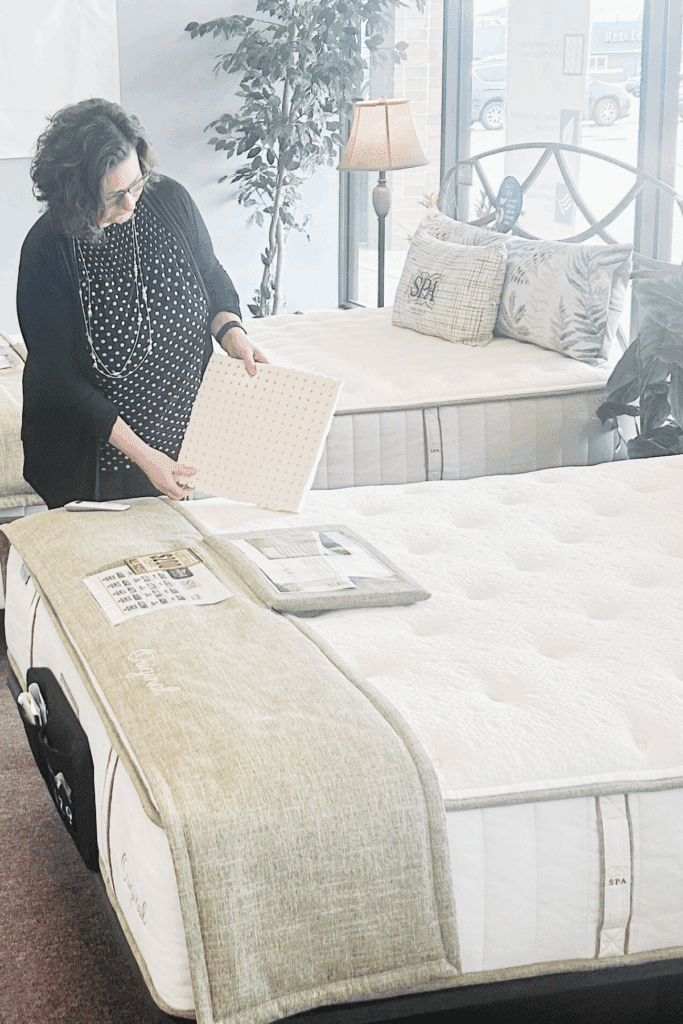
Having a basic understanding of mattress terms before shopping is great, as it may help you try amazing beds outside of your usual choices and comfort levels.
Most of my customers come in and request an extra, extra, extra firm mattress, assuming they are asking for a super supportive, best of the best mattress.
However, over the years, mattress descriptions have changed to include a variety of comfort levels.
So, you can have a very supportive, well-built (soft) double-pillowtop that is great for your body, as it contours and comes with a quality coil unit.
On the flip side, you could try an extra, extra firm (hard) mattress with an entry-level coil unit that is only geared for short-term use or guest rooms.
I added this section to the blog post as I love to see customers find something in my store they didn’t originally think would be a good fit, but fall in love with a perfect bed they originally didn’t even want to test.
Since this is a common cause of questions daily, I wrote an entire blog post to explain the differences in comfort and put them on a mattress firmness scale.
You can check that post out or look at the chart below to understand a little more about mattress firmness before shopping.
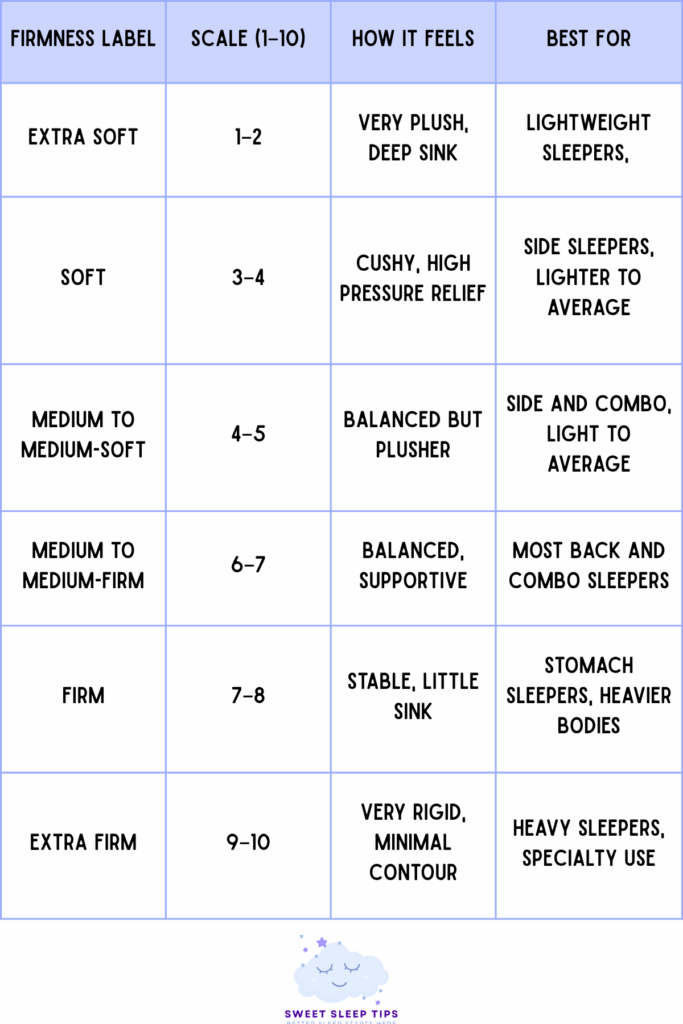
For my customers I start with a comfort test and have them try three models, a firm, medium, and soft with the same name, coil unit, durability, and warranty, and then tell me which felt the best.
This makes the process of finding the perfect comfort and supportive mattress much easier.
So instead of hunting for one firmness, walk in with an open mind to try different models and comfort levels.
Because, remember, your ultimate goal (and mine!) is to find a mattress where your body feels relaxed, supported, and comfortable.
Set a Realistic Budget and Must-Have Mattress Features

Another important step before you start mattress testing is to decide on a few of the following:
- A price range you feel good about.
- Any must-have features.
A few things you might care about:
- Motion transfer. If you share a bed and wake up easily, be sure to shop with your sleeping partner.
- Strong edge support. If you sit on the edge or like to spread out, be sure to check that it has a strong side.
- A cooler feel, if you sleep hot. Check for cooling fabric and breathability.
- A lower profile or lighter mattress, if you plan to move it often.
- If you are moving into a tight area and need split boxsprings.
Share these needs with the salesperson (we really love to help!), so you only test beds that actually fit your life and budget.
This saves time and avoids falling for a mattress that feels nice, but makes no sense for you.
How to Test a Mattress in a Store Like a Sleep Expert

Ok, now that we’ve covered everything before mattress shopping, it’s time to start testing beds like a pro.
I remind my customers before we begin that the key is to act as if you are already at home in bed, not just passing by for a quick sit.
When Mattress Shopping, Dress for Comfort

What you wear during mattress shopping can impact how the bed feels.
For example, if you shop in tight jeans, a stiff dress, or a huge winter coat, it is harder to feel what is going on under you.
To do a comfort test, I recommend:
- Wearing soft, flexible clothes, you can move in.
- Choose flat shoes or sneakers, or slip them off when you lie down.
- Take off bulky coats, belts, or big bags.
These small changes can make a big difference in your overall shopping experience.
Relax on Each Mattress During a Test Rest

I often joke with my customers that I know lying down on a mattress, with strangers in a store, is a bit awkward, and sometimes feels just plain weird.
However, you have no clue how a bed feels to your body unless you lay down, relax, and focus on your unique body needs and ultimate comfort level.
Keep in mind, the quick push on the side, sit test, or lying across the center of the bed is (almost) useless.
Your body needs a little time to relax into the mattress, how you normally sleep at night, to show you what the feel really is to your body.
Use this simple mattress shopping routine:
- Sit down on the bed near the middle (don’t crawl up the bottom), then lie on your back.
- Start on your main sleep position (side, back, stomach) and stay there for 5 minutes.
- Next, try another side for a couple of minutes, even if you do not sleep that way often.
- Now, spend 3 to 5 minutes in another position, breathing normally.
- If you ever sleep on your stomach, give that a few minutes too.
While you are testing the mattress, close your eyes, let your shoulders relax, and breathe as you do at night.
Check for Proper Spine Alignment and Pressure Points

Some more real talk here, you do not need fancy computer software or an imaging tool to tell if a mattress keeps your spine happy.
You can (and should be) your own judge.
For alignment:
- If you have a partner or friend with you, lie on your side and ask them to stand behind you. Your spine should look fairly straight from neck to tailbone, not sagging down or arching up.
- If you are alone, pay attention to how your hips and shoulders feel. If your hips or shoulders sink much deeper than the rest of you, the mattress might be too soft. If you feel like you are barely sinking at all, it might be too firm.
For pressure points:
- Notice your shoulders, hips, and knees.
- If you feel like your hips are way too low, the bed is too soft.
- If your lower back feels a pulling sensation, the bed is probably too firm.
- If you feel any tingling or numbness, that means the bed is probably too firm.
You want a feeling of even contact, and the bed should move with your spine and body.
No one spot should carry all your weight.
Test Mattress Motion Transfer and Edge Support

If you share a bed, you want to know how the mattress handles movement and edges.
You can copy these quick tests:
- Motion Transfer: One person lies on their back or side and closes their eyes. The other person sits down, climbs in, or rolls from side to side. The person lying should notice how much or how little movement they feel. Less movement means better motion isolation, which is nice if you have different bedtimes or a restless partner.
- Edge Support: Sit on the edge where you usually get in or out of bed. Do you sink too far or feel like you might slide off? Then lie down near the edge and see if you feel steady. Good edge support makes the mattress feel bigger and more useful, especially if two people share a smaller size. One thing to note, if an edge is too firm, it may cause a roll inward sensation, which isn’t great for sleeping.
Pay Attention to Temperature, Bounce, and Movement
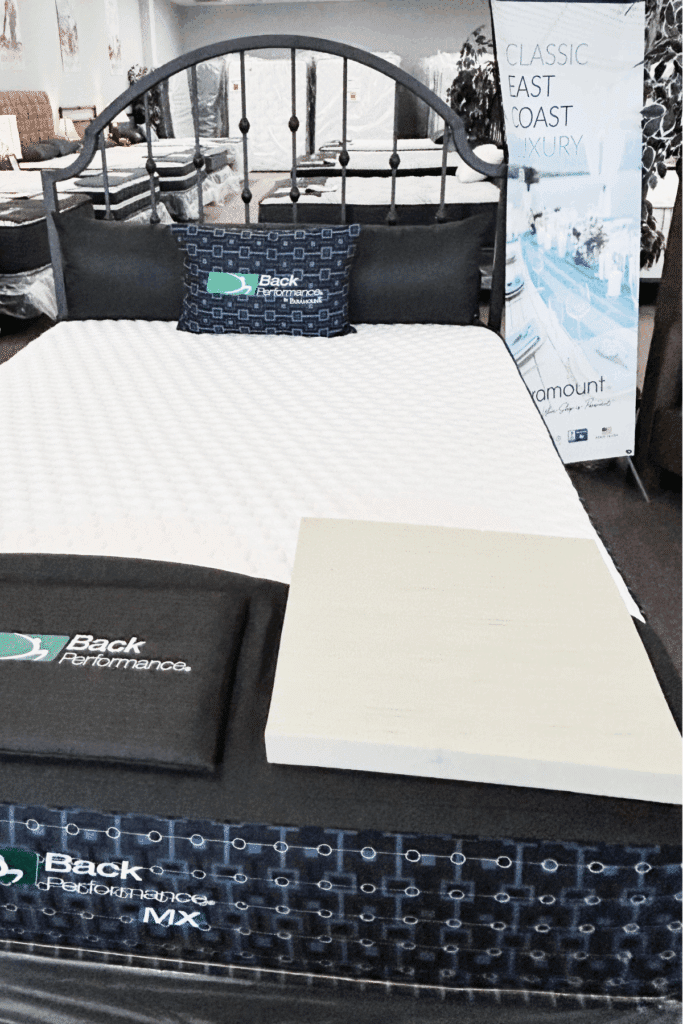
Here are a few more things that are important to notice while you are test resting a mattress.
While you lie there, pay close attention to a few more things:
- Temperature: Do you feel warm or flushed after a few minutes, or still neutral and comfortable?
- Bounce: Does the mattress feel springy and quick, or slow and absorbent?
- Ease of movement: Is it simple to roll from your back to your side, or do you feel stuck?
Here is a quick comparison you can keep in mind:

Something else to keep in mind: pick what fits your body and habits, not what someone else tells you should fit.
Smart Store Strategies So You Do Not Feel Rushed or Pressured
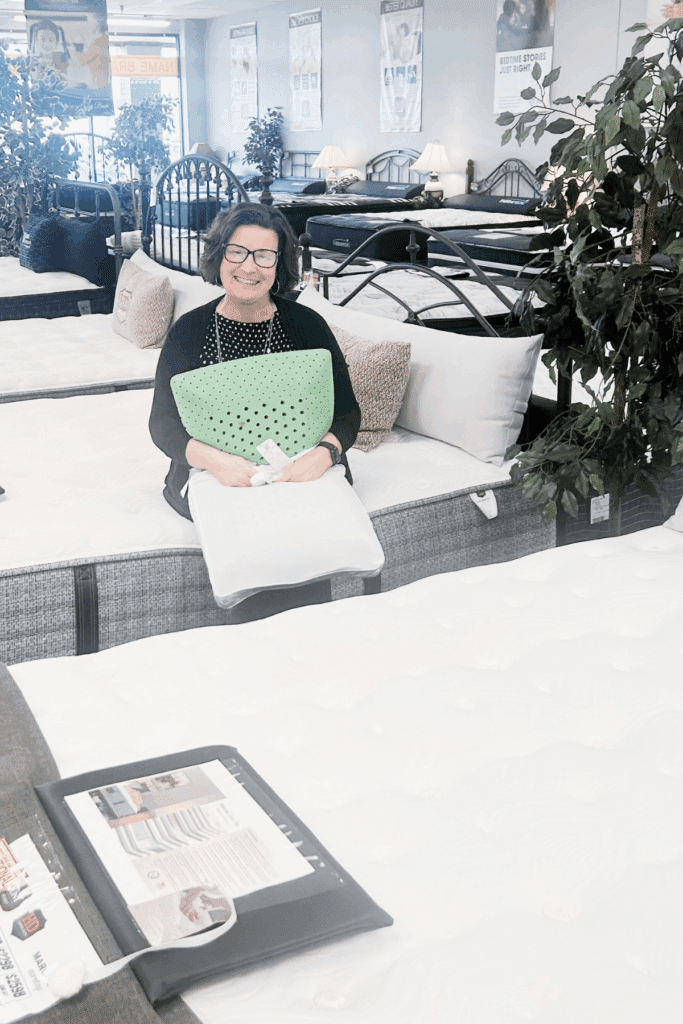
Testing the mattress is half the work.
The other half is staying calm and focused when sales talk, and choices pile up.
Here are a few tips to stay focused while mattress shopping.
Limit Your Choices

Stay focused while shopping and limit your choices to trying only a few in your price range or comfort level.
When you try ten or fifteen mattresses, they all start to blend together.
I often joke with my customers that trying too many mattresses all at once is the same as walking into a department store and being spritzed with 30 colognes; it’s just too overwhelming for the body, and your senses get tired.
A better plan:
- Do a comfort test as we talked about earlier. Ask the salesperson to narrow it to three models of the same support system that fit both your sleep needs and budget.
- Spend quality time on each one.
- Go back and forth between your top two or three.
As you move between them, sort them into a simple order: best, second best, third best.
Now it’s easier to see your real mattress favorites more clearly and navigate the store easily.
Ask Clear Mattress Shopping Questions
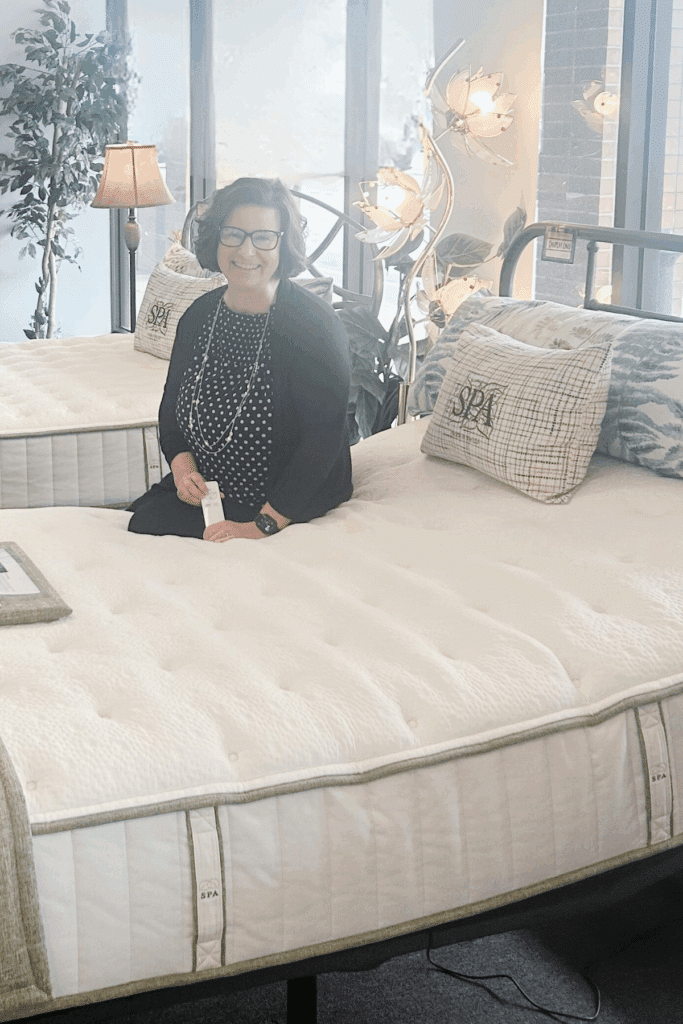
As a mattress salesperson, I like to cover lots of questions so there are no surprises later on.
After your comfort test and you’ve found the perfect mattress for you, here are a few questions to ask:
- “What is inside this mattress? Foam, springs, or a mix?”
- “Is this a flippable mattress or one-sided?”
- “Is this all-foam, hybrid, or innerspring?”
- “How long is the in-home trial?”
- “What is the return or exchange policy? Are there any fees?”
- “How long does it usually take to break in?”
- “Is there a manufacturer’s warranty?”
- “What are my delivery options?”
Keep in mind, you do not need to know every detail about foam densities or coil counts, unless you want to.
You just need the basics to know what you are paying for and how the purchase feels.
Take Quick Notes or Photos
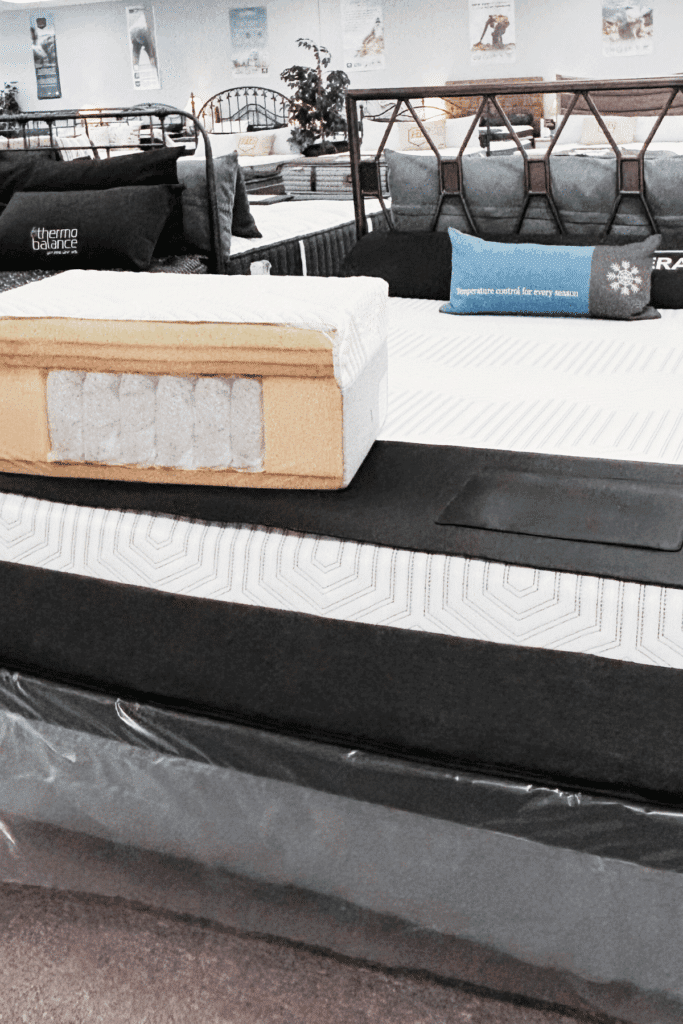
Here’s the thing: after the third or fourth mattress, your memory can get fuzzy (kind of like the cologne story!).
They all start to feel like “the soft one” or “the springy one.”
Use your phone to:
- Snap a photo of the mattress label or price tag.
- Note the firmness level written on the tag, like “medium” or “firm.”
- Add one or two words about how it felt, like “great shoulder relief,” “too hot,” or “love the bounce.”
If you visit more than one store, these notes are gold.
You can compare models at home, read reviews, and double-check which mattress actually felt best, not just which one had the biggest sale sign.
Make Your Final Choice With Confidence

By the time you finish mattress testing, you (should) know a lot more about the process than when you walked in.
Now you just need to pull together all the comfort testing, price looking, and details, and make a final decision.
Listen to Your Body (Not Just the Price Tag or Brand Name)

Remember, brand advertising, fancy models, and high prices can be tempting, but they can also distract you from the simple question that matters most: “How did my body feel on this mattress?”
If a mid-priced mattress gave you better support and less pain than a luxury one, it is completely fine to pick the mid-priced option.
Your back will not care what the label says.
It will only care about those hours of quality sleep every night.
Trust what your body told you during the 10 to 15 minutes of real testing.
Comfort and support, together, should beat hype every time.
Use a Simple Checklist Before You Buy
Before you hand over your credit card, run through a short checklist.
You can do it in your head or on your phone.
Ask yourself:
- Does this mattress feel comfortable in my usual sleep positions?
- Does my back feel supported, without sagging or strain?
- Do I like the temperature, bounce, and how easy it is to move?
- Does the price fit my budget, including delivery and any extras?
- Am I satisfied with the trial period, return policy, and warranty?
If you can say “yes” to most or all of those, you probably found a good match.
If you hesitate on several, it is okay to step back, sleep on the decision, or visit a different store.
You are the one who will sleep on this bed every night. You get the final call.

Final Thoughts
Testing a mattress properly can make all the difference between restless nights and truly restorative sleep.
From my many years guiding customers in the showroom, I’ve seen firsthand how taking the time to lie down, move around, and pay attention to support, pressure points, and comfort leads to smarter, more confident mattress choices.
It’s not just about feeling good for a few minutes in the store—it’s about investing in nights of better sleep, mornings where you wake up refreshed, and overall long-term health.
The right mattress can improve everything from your mood to your energy levels, and knowing how to test one correctly ensures you choose a bed that truly fits your unique needs.
After all, as I tell my customers, a mattress is an investment in yourself, and taking the time to test it thoroughly is the key to making that investment pay off each and every night.
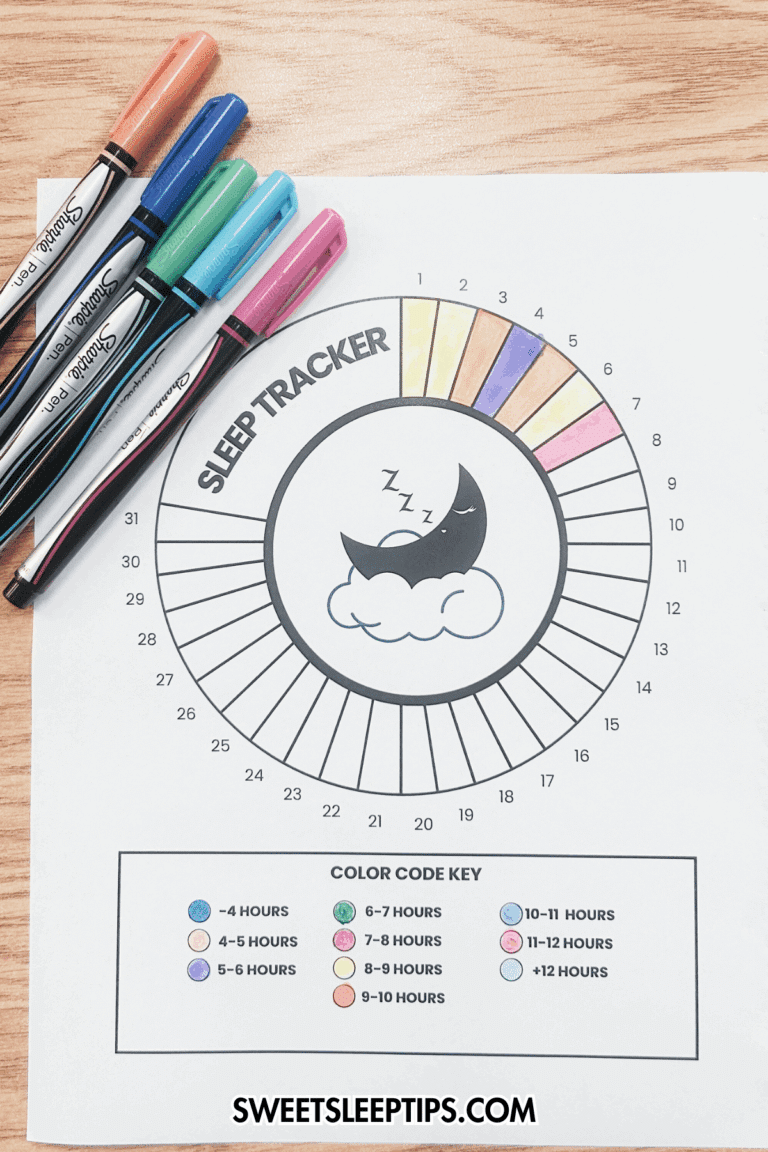
Need some more help with sleep? Grab a free printable bedtime habit tracker below, and we’ll send it straight to your inbox!
Your Turn
Now it’s your turn! Next time you’re mattress shopping, give yourself permission to test like a pro! Do you have any questions on how to test a mattress for your next shopping trip? Let me know in the comments below!
RELATED POSTS
- How to Know When to Replace Mattress (Tips from a Mattress Expert)
- Ultimate Mattress Buying Guide: Expert Tips to Find Your Perfect Night’s Sleep
- Why Buy a Mattress Protector: What Most Mattress Shoppers Don’t Realize
- How to Choose the Best Bed Pillow For Sleeping (Tips From an Expert)
- How to Choose the Right Mattress Type for Better Sleep
- How to Choose the Correct Mattress Firmness From a Mattress Pro
- How To Choose The Right Size Of Mattress: Buying Guide
- Best Bed Sheets for Hot Sleepers: What to Buy to Stay Cool and Sleep Well
- Find the Best Mattress Topper for Your Sleep: Memory Foam, Latex, Cooling, and More
- Peaceful Bedroom Ideas to Create a Tranquil Space for Better Sleep


Hi, I’m Debbie, general manager of a mattress store chain with 25+ years helping people improve their sleep quality. At Sweet Sleep Tips, I share natural, practical sleep solutions, calming bedtime habits, and printable tools to help you fall asleep faster and wake up refreshed. My goal is to make better sleep simple, healthy, and stress-free.
Follow me on Pinterest, Instagram, and Facebook to stay up to date with all the latest Sweet Sleep Tips.




Really great tips in here! Thank you Debbie! We are gonna need a new mattress soon!
There are so many tips here I never thought about when buying a mattress! I’ve even bought mattresses online without testing them out, which is probably not the best idea, haha. Thanks for sharing your expertise! I love how you break it down into easy-to-read charts, too!