
Relaxation Exercises for Sleep That Calm a Busy Mind
If you’re like me, you’ve probably searched for relaxation exercises for sleep after spending one too many nights staring at the ceiling, wishing your brain would finally quiet down.
Some nights, sleep acts like it missed the memo.
You turn off the light, settle into bed, and suddenly your mind decides it’s the perfect time to replay conversations, worry about tomorrow, or make a mental to-do list.
If that sounds familiar, you’re definitely not alone.
Learning a few simple relaxation techniques for sleep can make a bigger difference than you might think.
I learned the value of relaxation exercises for sleep years ago when my husband worked the midnight shift as a K9 officer.
While he was out working through the night, I often found myself lying awake listening for every little sound, worrying, and struggling to fully relax.
Those long nights taught me that falling asleep isn’t always about being tired.
Sometimes it’s about helping your mind and body feel safe enough to let go of the day.
That’s when I started using simple relaxation exercises before bed.
Breathing techniques, gentle muscle relaxation, and mindfulness practices helped calm my racing thoughts and release the tension I didn’t even realize I was carrying.
Even now, years after my husband left the midnight shift, these exercises remain part of my bedtime routine.
Whenever my mind feels busy or my body feels tense, they help me slow down, quiet the mental chatter, and prepare for restful sleep.
I’ve spent more than 25 years as a mattress store general manager, and one thing I’ve learned is that a comfortable mattress is only part of the sleep equation.
A relaxed mind and body matter just as much.
The good news is that relaxation exercises are simple, free, and easy to practice.
With a little consistency, they can help you fall asleep faster, sleep more peacefully, and wake up feeling more refreshed.
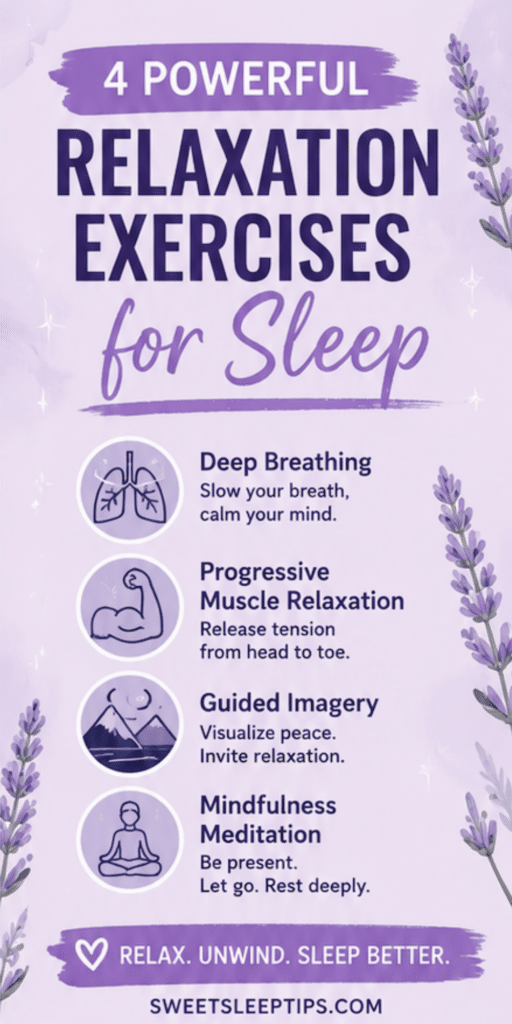
To help you on your journey for better rest, I’ll share my favorite relaxation exercises for sleep, including deep breathing, progressive muscle relaxation, guided imagery, and mindfulness techniques that can help calm your mind and relax your body before bed.
So, are you ready to get started? Great! Let’s get into it!
I may earn a small commission for affiliate links in this post at no extra cost to you. Please read my privacy policy and privacy page for more information. As an Amazon Associate, I earn from qualifying purchases.
Key Takeaways
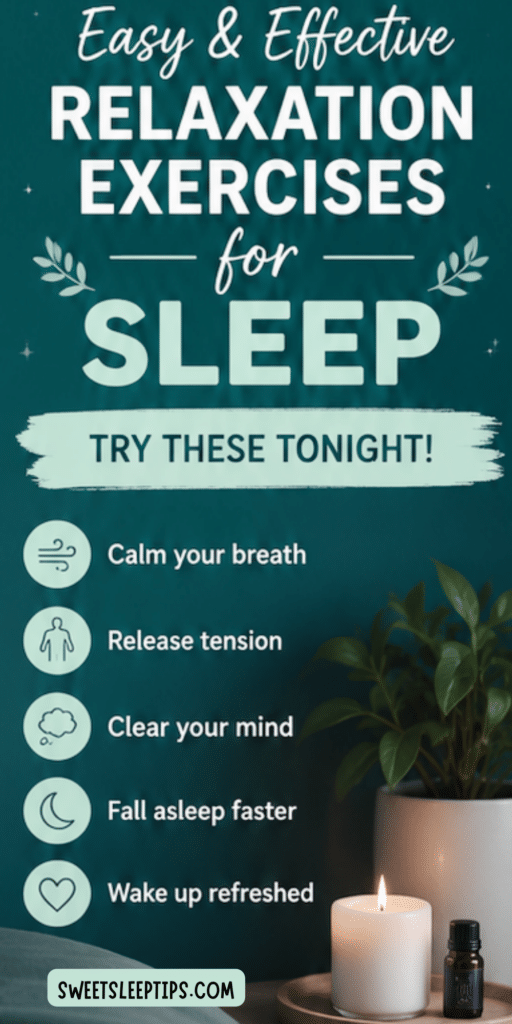
- Relaxation exercises for sleep help calm both the mind and body by lowering heart rate, easing muscle tension, and reducing bedtime stress.
- Deep breathing, progressive muscle relaxation, guided imagery, and mindfulness meditation are simple techniques you can start using tonight.
- Consistency matters more than perfection. Practicing relaxation techniques regularly helps train your body to wind down more easily.
- A short bedtime routine makes relaxation exercises more effective by signaling to your brain that it’s time to rest.
- Rather than forcing sleep, focus on creating a calm, relaxed state that allows sleep to happen naturally.
Why relaxation works when your mind keeps you awake
Sleep is difficult when your body still feels like it is on alert.
Your heart rate increases, your breathing becomes shallow, and your muscles remain braced as if you are waiting for a threat.
This state makes falling asleep feel nearly impossible, even when you are physically exhausted.
According to Mayo Clinic’s overview of relaxation techniques, calming practices help trigger the relaxation response, which is the physiological opposite of stress.
By lowering your heart rate, easing muscle tension, and calming your nervous system, you help your body stop fighting rest.
The goal is not to force sleep, but to provide the internal environment necessary to improve your overall sleep quality.
How stress shows up at bedtime

Stress at bedtime does not always look dramatic.
Sometimes it manifests as your shoulders creeping up toward your ears or lingering muscle tension that you cannot seem to release.
It might also appear as a clenched jaw, a tight stomach, or a mind persistently replaying a conversation from earlier in the day.
You might notice yourself checking the clock repeatedly and doing mental math to calculate how much rest you will get.
This habit ramps up pressure quickly.
The more you watch the clock, the more difficult it becomes to drift off.
What your body needs to feel safe enough to sleep

Your body sleeps better when it receives consistent, calming signals.
Slower breathing and soft, relaxed muscles communicate that there is nothing required of you in this moment.
Using these techniques is an effective way to manage stress and anxiety, signaling to your brain that it is time to transition from a state of high alert to a state of rest.
If your body thinks it is still on duty, your mind will not clock out either.
That is why these exercises matter.
They help shift you out of go-mode and into rest-mode.
They may not work perfectly every single night, but they provide the signals your body needs to prepare for restorative rest.
Simple relaxation exercises for sleep you can start tonight
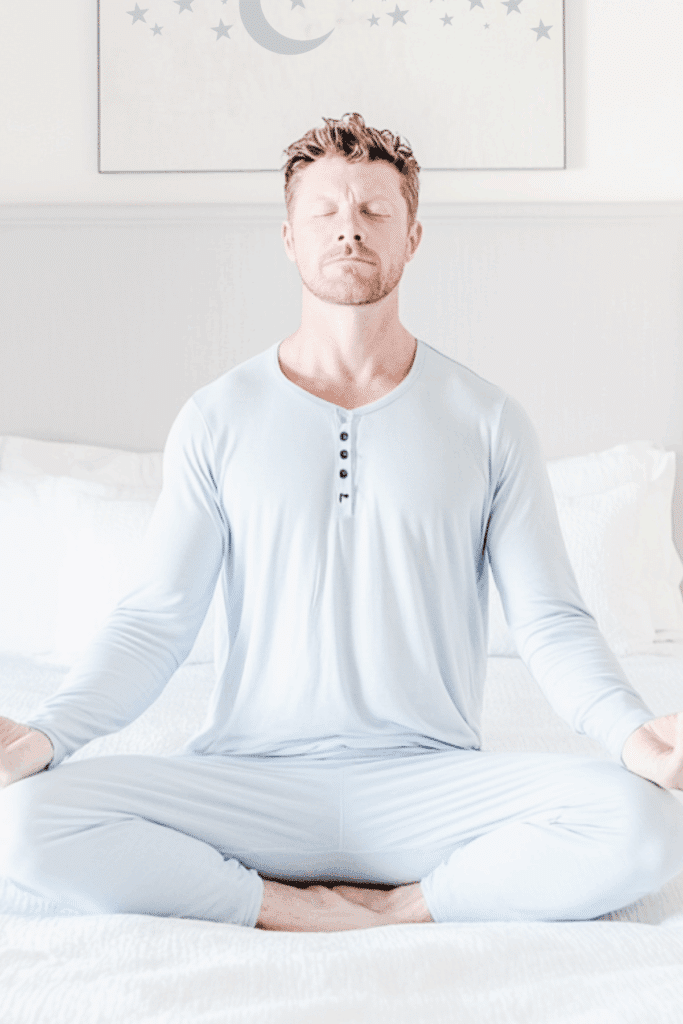
You don’t need special gear.
You don’t need an app for every step.
And you don’t need to do all of these at once.
Pick one or two, try them at the same time each night, and mix things up only if something doesn’t feel like a fit.
If you already have a relaxing night routine in place, these exercises slide right into it.
If you don’t, this is still a good place to start.
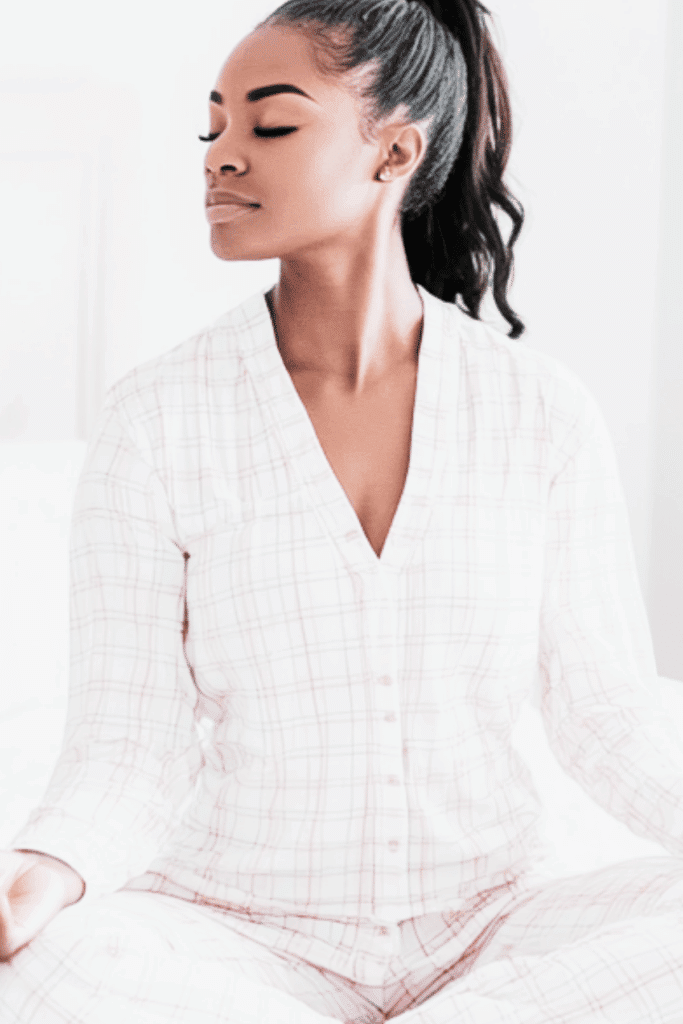
Deep breathing is the easiest place to start because it is always with you.
When your exhale gets longer than your inhale, your body often follows that calmer rhythm.
Diaphragmatic breathing helps engage the parasympathetic nervous system to promote rest.
Try this once you are in bed:
- Breathe in through your nose for a count of 4.
- Hold for a count of 7.
- Breathe out slowly for a count of 8. This 4-7-8 breathing technique is highly effective for signaling to your body that it is time to wind down.
Don’t force giant breaths.
That is a common mistake.
Keep it easy and quiet.
If counting keeps you alert, skip the numbers and focus on the sensation of air moving.
Release muscle tension with progressive muscle relaxation

A lot of tension hides in plain sight.
You may not notice how tight your calves, hands, or forehead feel until you consciously let them soften.
Progressive muscle relaxation is a proven method for this.
Work your way through different muscle groups, starting at your feet.
Gently tense them for about five seconds, then let go.
Move up to your calves, thighs, stomach, hands, shoulders, and face.
By tensing and relaxing each area, you create a clear contrast that makes it easier to identify physical stress.
Progressive muscle relaxation helps you learn the difference between a clenched state and a state of complete rest.
When you reach your jaw or forehead, most people realize how much effort they were carrying.
That release can feel like opening a fist you forgot you were making.
Use guided imagery and visualization for a calm mind

Your brain has a hard time holding two strong channels at once.
If worry is taking up all the space, guided imagery can give your attention somewhere else to land.
Use visualization to transport yourself to a place that feels easy.
For example:
- Maybe it is a quiet beach with slow waves.
- Maybe it is rain tapping on the roof.
- Add detail, but keep it gentle.
- What do you hear?
- What does the air feel like?
The more your senses join in, the less room your mind has to keep spinning.
This is especially useful when you wake up at 2 a.m., and your thoughts start sprinting.
Practice a short mindfulness meditation or body scan

Mindfulness meditation does not have to mean sitting cross-legged and clearing your mind.
At bedtime, it can be as simple as noticing your breath for three minutes and letting thoughts pass without following them.
If silence makes your mind louder, use a short guided audio.
You can also perform a body scan, where you mentally check in with every part of your body from head to toe to identify and release any lingering tension before you drift off.
You are not trying to be good at meditation.
You are giving your brain one quiet, repetitive thing to do.
Use a phrase like “I am here” on the inhale and “I am safe” on the exhale.
Simple works.
Build a bedtime routine that makes these exercises work better

Relaxation works better when bedtime does not feel like a sudden stop.
Your brain needs a runway, not a brick wall.
A small routine helps your body recognize what is coming next, which is a core component of effective sleep hygiene.
You do not need a long checklist.
You need a repeatable pattern.
Pick the same time to start winding down

Your body likes rhythm.
When you dim the lights, wash your face, and perform the same exercise at roughly the same time each night, you reinforce a consistent sleep schedule that helps bedtime stop feeling random.
Try attaching one exercise to a moment you already have.
After skincare, do your breathing.
After you set your phone down, do your body scan.
That kind of pairing makes habits stick.
Miss a night?
That is fine.
Pick it back up the next night and keep moving.
Make your room feel calmer before you begin

It is easier to relax in a room that is not working against you.
Lower the lights and turn down noise if you can.
Keep your sleep environment cool and the bed comfortable.
If your space feels busy, a few small changes go a long way.
You might want ideas for how to make your bed more comfortable, so the physical side of sleep gets easier, too.
You do not need a magazine-perfect bedroom.
You need a space that feels settled and prepared for rest.
Keep your routine short so you actually stick with it

This is where people often struggle.
They build a 12-step nighttime ritual, then drop it three days later because it is too much effort.
Go small.
Try five minutes of slow breathing, then visualize one calming image.
Or do a quick body scan once the lights are out.
That is plenty.
A short routine is easier to repeat, and consistency is what trains your body to relax faster.
Common mistakes that can make relaxation feel less effective

If these exercises do not help you drift off on the first night, that does not mean they have failed.
It usually means your body needs time to trust the pattern.
In fact, many of these relaxation methods are core components of professional treatments for insomnia, such as cognitive behavioral therapy, which prioritize consistency over immediate results.
A few common mistakes can also get in the way.
Expecting instant sleep every night

Relaxation is not a light switch.
It is more like dimming a room.
Some nights the shift happens fast, while other nights it takes longer.
If you judge every exercise by whether you are falling asleep in ten minutes, you will get frustrated quickly.
A better question is this: “Do I feel less wound up than I did before?”
That is progress.
Using too many techniques at once

When sleep becomes difficult, it is tempting to throw the entire toolbox at the problem.
Breathing, stretching, audio, magnesium, counting backward, new pillows, white noise, and lavender all in one night is simply too much.
Too many steps can make bedtime feel like a project.
Pick one exercise for your body and one for your mind.
Stay with them for a week before changing course.
Simple beats impressive here.
Doing exercises only after you are already wide awake

These tools help most when you use them early.
If you wait until you are fully frustrated, clock-watching, and tense from head to toe, it takes much more work to settle down.
Use them before stress builds.
Start your breathing when you first get into bed.
Do the body scan when you notice your shoulders tighten.
Catch the restlessness early, and sleep usually comes easier.
Frequently Asked Questions
Can I do these exercises if I am already feeling stressed at bedtime?
Yes, these techniques are specifically designed to help shift your body out of a high-alert state. The sooner you start them—ideally as soon as you get into bed—the more effective they will be at preventing stress from building up.
How long should I practice a relaxation exercise before giving up?
It is best to focus on the feeling of relaxation rather than the clock, as checking the time can increase anxiety. Try a technique for at least 5 to 10 minutes, and remember that the primary goal is to help your body feel calm, which is the necessary foundation for sleep.
Do I need to be perfect at these techniques for them to work?
Not at all, as these exercises are not about performance or clearing your mind completely. Simply noticing your thoughts and gently returning to your breathing or a body scan is perfectly effective for quietening a busy mind.
Final Thoughts
Falling asleep isn’t always as simple as turning off the light and closing your eyes.
Sometimes your body is tired, but your mind is still running laps.
That’s where relaxation exercises can make a real difference.
The best part is that you don’t need special equipment, a complicated routine, or hours of extra time.
Even a few minutes of focused breathing, gentle muscle relaxation, or mindfulness can help signal to your body that the day is over and it’s time to rest.
I’ve personally relied on these techniques for years, starting when my husband worked midnight shifts and continuing long after those nights were behind us.
They remain one of my favorite tools for calming a busy mind and easing into sleep naturally.
The key is to be patient with yourself and practice regularly.
Like any healthy habit, relaxation exercises tend to become more effective the more often you use them.
If you’ve been struggling to unwind at bedtime, try a few of the exercises on this list and see which ones feel most comfortable for you.
Sometimes the smallest changes to your bedtime routine can lead to the biggest improvements in your sleep.
Need help unwinding before bed? Grab this sleep meditation free printable guide below, and we’ll send it straight to your inbox.
Your Turn
Have you tried relaxation exercises for sleep before? I’d love to hear which techniques work best for you. Do you prefer deep breathing exercises, progressive muscle relaxation, guided imagery, meditation, or something else entirely? If you’re just getting started, which exercise from this list are you planning to try first? Share your experience in the comments below. Your favorite bedtime relaxation tip might be exactly what another reader needs to finally get a better night’s sleep.
RELATED POSTS:
- Sleep Hygiene Tips That Work [Free Printable Checklist Included]
- Relaxation Activities for Adults: Calming Night Routine Ideas to Help You Sleep Better
- Best Evening Routine for Better Sleep: Simple Habits That Work
- Night Routine List for Better Sleep [Free Printable + Simple Steps]
- Simple Night Journal Prompts for Peace and Clarity
- Bedtime Habit Tracker: Free Printable for a Better Sleep Routine
- Night Affirmations Before Sleep: Simple Steps for a Calmer Mind [Free Printable Cards]
- How to Build a Sleep Routine That Actually Works
- Free Printable Sleep Tracker to Finally Understand Your Sleeping Habits
- Sleep Meditation: Simple Guide for Better Rest + Free Printable
- Brain Dump Before Bed for Better Sleep: Free Printable and Simple Night Routine
- Fall Sleep Essentials to Make Your Bedroom Extra Cozy This Autumn Season





Thank you for sharing these simple relaxation exercises for sleep. I usually don’t have trouble falling asleep, but I can see myself using these ideas sometimes when I wake up in the middle of the night. I’ll try the slow breathing next time!
Thankyou for sharing this post! What really stood out to me was having a routine. I’m one of those people who likes quick results. A lot of times I have to be patient. Patience and consistency with a routine can definitely get results. I recently started using a nose spray and allergy pills for a chronic runny nose problem. I’ve been feeling like they haven’t been helping, because my nose is still running. I brought my concern up with a family member. I snore really badly at night, and my family member told me that ever since I started the using the nose and taking the allergy pills I haven’t been snoring as bad it at all! I guess the medications are working after all. They seem to be helping me sleep better. This goes to show you don’t be so quick to give up and drop a routine. Thankyou again for sharing this post!
These are simple relaxation exercises for sleep and I can see myself using them. Most of the time I fall asleep once my head hits the pillow but there are those occasions when I can’t sleep. These will come in handy.